
Never say of anything, 'I have lost it'; but, 'I have returned it.' Is your child dead? It is returned. Is your wife dead? She is returned. Is your estate taken away? Well, and is not that likewise returned?

“That though the radiance which was once so bright be now for ever taken from my sight, though nothing can bring back the hour of splendour in the grass, of glory in the flower; we will grieve not, rather find strength in what remains behind.”
Never say of anything, 'I have lost it'; but, 'I have returned it.' Is your child dead? It is returned. Is your wife dead? She is returned. Is your estate taken away? Well, and is not that likewise returned?

Knowing that certain nights whose sweetness lingers will keep returning to the earth and sea after we are gone, yes, this helps us to die.

To every thing there is a season, and a time to every purpose under the heaven: A time to be born, and a time to die; a time to plant, and a time to pluck up that which is planted; A time to kill, and a time to heal; a time to break down, and a time to build up; A time to weep, and a time to laugh; a time to mourn, and a time to dance.

The temple bell stops but I still hear the sound coming out of the flowers.

At the bottom of the fall we were able to stand again on dry land. The rope could not be recovered. We had flung down the adze from the top of the fall and also the logbook and the cooker wrapped in one of our blouses. That was all, except our wet clothes, that we brought out of the Antarctic, which we had entered a year and a half before with well-found ship, full equipment, and high hopes. That was all of tangible things; but in memories we were rich. We had pierced the veneer of outside things. We had "suffered, starved and triumphed, groveled down yet grasped at glory, grown bigger in the bigness of the whole. We had seen God in His splendours, heard the text that Nature renders." We had reached the naked soul of man.
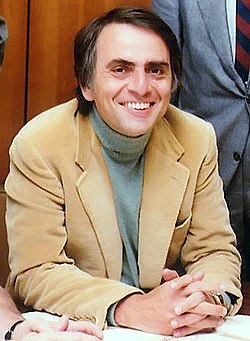
I would love to believe that when I die I will live again, that some thinking, feeling, remembering part of me will continue. But much as I want to believe that, and despite the ancient and worldwide cultural traditions that assert an afterlife, I know of nothing to suggest that it is more than wishful thinking. The world is so exquisite with so much love and moral depth, that there is no reason to deceive ourselves with pretty stories for which there's little good evidence. Far better it seems to me, in our vulnerability, is to look death in the eye and to be grateful every day for the brief but magnificent opportunity that life provides.
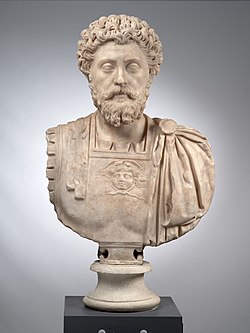
Not to live as if you had endless years ahead of you. Death overshadows you. While you're alive and able—be good.
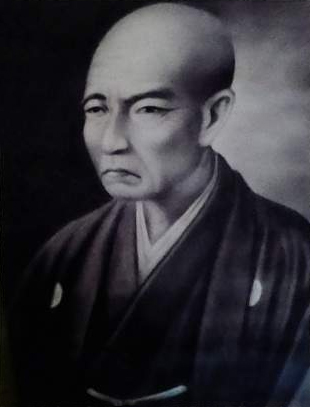
It is said that what is called the spirit of an age is something to which one cannot return. That this spirit gradually dissipates is due to the world's coming to an end. In the same way, a single year does not have just spring or summer. A single day, too, is the same.
Loss is nothing else but change, and change is Nature's delight.

The Moving Finger writes; and, having writ, moves on: nor all thy Piety nor Wit shall lure it back to cancel half a Line, nor all thy Tears wash out a Word of it.

We have surmounted all the perils and endured all the agonies of the past. We shall provide against and thus prevail over the dangers and problems of the future, withhold no sacrifice, grudge no toil, seek no sordid gain, fear no foe. All will be well. We have, I believe, within us the life-strength and guiding light by which the tormented world around us may find the harbour of safety, after a storm-beaten voyage.
If there is a sin against life, it consists perhaps not so much in despairing of life as in hoping for another life and in eluding the implacable grandeur of this life.

Life is short, and Art long; the crisis fleeting; experience perilous, and decision difficult.
Come, let us go snow-viewing till we are buried.

One is constantly reminded of the infinite lavishness and fertility of Nature — inexhaustible abundance amid what seems enormous waste. And yet when we look into any of her operations that lie within reach of our minds, we learn that no particle of her material is wasted or worn out. It is eternally flowing from use to use, beauty to yet higher beauty; and we soon cease to lament waste and death, and rather rejoice and exult in the imperishable, unspeakable wealth of the universe, and faithfully watch and wait the reappearance of everything that melts and fades and dies about us, feeling sure that its next appearance will be better and more beautiful than the last.

I do not think we can hope for any better things now. We shall stick it out to the end, but we are getting weaker, of course, and the end cannot be far. It seems a pity, but I do not think I can write more. For God's sake look after our people.
So remember this principle when something threatens to cause you pain: the thing itself was no misfortune at all; to endure it and prevail is great good fortune.

In this world / we walk on the roof of hell / gazing at flowers

Our bodies are perishable, wealth is not at all permanent and death is always nearby. Therefore we must immediately engage in acts of merit.

Tomorrow, and tomorrow, and tomorrow,Creeps in this petty pace from day to day,To the last syllable of recorded time;And all our yesterdays have lighted foolsThe way to dusty death. Out, out, brief candle!Life's but a walking shadow, a poor playerThat struts and frets his hour upon the stage,And then is heard no more. It is a taleTold by an idiot, full of sound and fury,Signifying nothing.

My life is like a stroll upon the beach, As near the ocean's edge as I can go.
Do not act as if thou wert going to live ten thousand years. Death hangs over thee. While thou livest, while it is in thy power, be good.

It is good for us that we sometimes have sorrows and adversities, for they often make a man lay to heart that he is only a stranger and sojourner, and may not put his trust in any worldly thing. It is good that we sometimes endure contradictions, and are hardly and unfairly judged, when we do and mean what is good. For these things help us to be humble, and shield us from vain-glory.
Happy is the man who hath the hour of his death always before his eyes, and daily prepareth himself to die.

Eventually, all things merge into one, and a river runs through it. The river was cut by the world's great flood and runs over rocks from the basement of time. On some of those rocks are timeless raindrops. Under the rocks are the words, and some of the words are theirs. I am haunted by waters.