
Echoes

Boethius
523 AD
“It is the nature of human affairs to be fraught with anxiety; they never prosper perfectly, and they never remain constant.”
❧
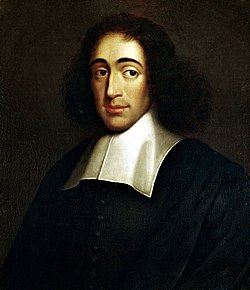
There is no hope unmingled with fear, and no fear unmingled with hope.
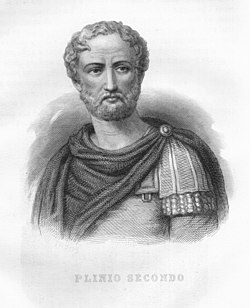
The only certainty is that nothing is certain.

Though business conditions may change, corporations and securities may change, and financial institutions and regulations may change, human nature remains the same. Thus the important and difficult part of sound investment, which hinges upon the investor's own temperament and attitude, is not much affected by the passing years.

It is just as foolish to complain that people are selfish and treacherous as it is to complain that the magnetic field does not increase unless the electric field has a curl. Both are laws of nature.

Americans cleave to the things of this world as if assured that they will never die,… They clutch everything but hold nothing fast, and so lose grip as they hurry after some new delight. ... Death steps in in the end and stops him before he has grown tired of this futile pursuit of that complete felicity which always escapes him. At first sight there is something astonishing in this spectacle of so many lucky men restless in the midst of abundance. But it is a spectacle as old as the world; all that is new is to see a whole people performing in it.
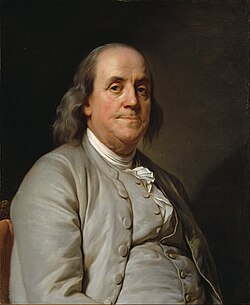
In this world, nothing is certain except death and taxes.

Everything changes; nothing perishes.

All is not frustrated, though thou find thyself very often afflicted or grievously tempted. Thou art man, not God; thou art flesh, not an angel.

No man ever steps in the same river twice, for it is not the same river and he is not the same man.

The strange thing about life is that though the nature of it must have been apparent to every one for hundreds of years, no one has left any adequate account of it. The streets of London have their map; but our passions are uncharted. What are you going to meet if you turn this corner?

Human nature being what it is, events which happened in the past will at some time or other and in much the same ways be repeated in the future.

The great source of both the misery and disorders of human life, seems to arise from over-rating the difference between one permanent situation and another. Avarice over-rates the difference between poverty and riches: ambition, that between a private and a public station: vain-glory, that between obscurity and extensive reputation. The person under the influence of any of those extravagant passions, is not only miserable in his actual situation, but is often disposed to disturb the peace of society, in order to arrive at that which he so foolishly admires. The slightest observation, however, might satisfy him, that, in all the ordinary situations of human life, a well-disposed mind may be equally calm, equally cheerful, and equally contented. Some of those situations may, no doubt, deserve to be preferred to others: but none of them can deserve to be pursued with that passionate ardour which drives us to violate the rules either of prudence or of justice; or to corrupt the future tranquillity of our minds, either by shame from the remembrance of our own folly, or by remorse from the horror of our own injustice.

Man is not worried by real problems so much as by his imagined anxieties about real problems.
There is no man in the world free from trouble or anguish, though he were King or Pope.
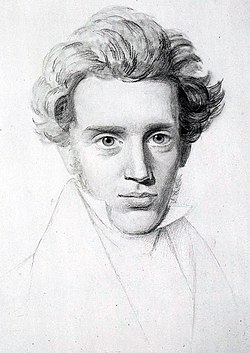
Anxiety is the dizziness of freedom.

Nature never deceives us; it is we who deceive ourselves.
We suffer more often in imagination than in reality.

We cling to our own point of view, as though everything depended on it. Yet our opinions have no permanence; like autumn and winter, they gradually pass away.
Men are at variance with the one thing with which they are in the most unbroken communion, the reason that administers the whole universe.
Nothing is permanent in all the world. All things are fluid; every image forms, wandering through change. Time itself flows on in constant motion, just like a river, for neither the river nor the swift hour can stop its course; but as wave impels wave, and as each wave comes, the one before is both impelled by the next and impels the one ahead, so time both flees and follows and is always new.

It may be observed, that provinces amid the vicissitudes to which they are subject, pass from order into confusion, and afterward recur to a state of order again; for the nature of mundane affairs not allowing them to continue in an even course, when they have arrived at their greatest perfection, they soon begin to decline. In the same manner, having been reduced by disorder, and sunk to their utmost state of depression, unable to descend lower, they, of necessity, reascend; and thus from good they gradually decline to evil, and from evil again return to good. The reason is, that valor produces peace; peace, repose; repose, disorder; disorder, ruin; so from disorder order springs; from order virtue, and from this, glory and good fortune.

The truth is rarely pure and never simple.

Life will have terrible blows, horrible blows, unfair blows. It doesn't matter. And some people recover and others don't. There I think the attitude of Epictetus is the best. He thought that every mischance in life was an opportunity to behave well — an opportunity to learn something.
I assert once again as a truth to which history as a whole bears witness that men may second their fortune, but cannot oppose it; that they may weave its warp, but cannot break it. Yet they should never give up, because there is always hope, though they know not the end and more towards it along roads which cross one another and as yet are unexplored; and since there is hope, they should not despair, no matter what fortune brings or in what travail they find themselves.