
Echoes

Ovid
16 BC
“We always strive for what is forbidden, and desire what is denied.”
❧
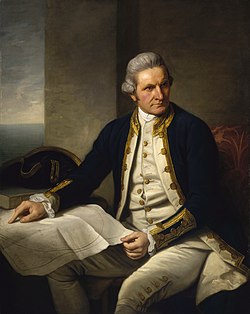
I whose ambition leads me not only farther than any other man has been before me, but as far as I think it possible for man to go.

There is in fact a manly and legitimate passion for equality that spurs all men to wish to be strong and esteemed. This passion tends to elevate the lesser to the rank of the greater. But one also finds in the human heart a depraved taste for equality, which impels the weak to want to bring the strong down to their level, and which reduces men to preferring equality in servitude to inequality in freedom.
I think that democratic communities have a natural taste for freedom: left to themselves, they will seek it, cherish it, and view any privation of it with regret. But for equality, their passion is ardent, insatiable, incessant, invincible: they call for equality in freedom; and if they cannot obtain that, they still call for equality in slavery.
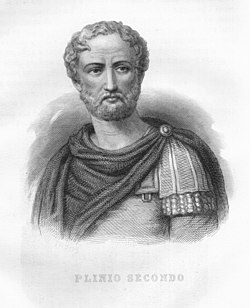
An object in possession seldom retains the same charm that it had in pursuit.

There are some men who expose themselves to damnation so foolishly by avarice, by brutality, by debauches, by violence, by excesses, by blasphemies! ...it is always a great folly for a man to expose himself to damnation... He must despise desire and its kingdom, and aspire to that kingdom of love in which all the subjects breathe nothing but love, and desire nothing but the benefits of love.

You will hear every day the maxims of a low prudence. You will hear, that the first duty is to get land and money, place and name. "What is this Truth you seek? What is this Beauty?" men will ask, with derision. If, nevertheless, God have called any of you to explore truth and beauty, be bold, be firm, be true. When you shall say, "As others do, so will I. I renounce, I am sorry for it, my early visions; I must eat the good of the land, and let learning and romantic expectations go, until a more convenient season." — then dies the man in you; then once more perish the buds of art, and poetry, and science, as they have died already in a thousand thousand men. The hour of that choice is the crisis of your history; and see that you hold yourself fast by the intellect. ... Bend to the persuasion which is flowing to you from every object in Nature, to be its tongue to the heart of man, and to show the besotted world how passing fair is wisdom.

By following entirely the guidance of lust, in the manner of fools, man loses his intellectual energy, injures his body, and perishes before his natural time; sighs and cares multiply; there is an increase of envy, hatred, and warfare, for the purpose of taking what another possesses. The cause of all this is the circumstance that the ignorant considers physical enjoyment as an object to be sought for its own sake. God in His wisdom has therefore given us such commandments as would counteract that object, and prevent us altogether from directing our attention to it, and has debarred us from everything that leads only to excessive desire and to lust. This is an important thing included in the objects of our Law.
I had ambition not only to go farther than anyone had done before, but as far as it was possible for man to go.

He whose intellect overcomes his desire is higher than the angels; he whose desire overcomes his intellect is less than an animal.

There are two ways to get enough. One is to continue to accumulate more and more. The other is to desire less.

The wealth required by nature is limited and is easy to procure; but the wealth required by vain ideals extends to infinity. (15)
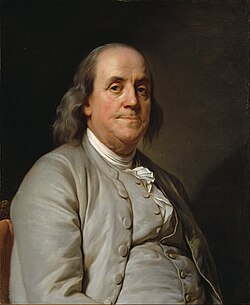
Who dainties love shall beggars prove.
Ambition leads me not only farther than any other man has been before me, but as far as I think it is possible for man to go.

I believe it is in our nature to explore, to reach out into the unknown. The only true failure would be not to explore at all.
Every excess causes a defect; every defect an excess. Every sweet hath its sour; every evil its good.

It may be confidently asserted that no man chooses evil because it is evil; he only mistakes it for happiness, the good he seeks. And the desire of rectifying these mistakes, is the noble ambition of an enlightened understanding, the impulse of feelings that Philosophy invigorates.
Americans cleave to the things of this world as if assured that they will never die,… They clutch everything but hold nothing fast, and so lose grip as they hurry after some new delight. ... Death steps in in the end and stops him before he has grown tired of this futile pursuit of that complete felicity which always escapes him. At first sight there is something astonishing in this spectacle of so many lucky men restless in the midst of abundance. But it is a spectacle as old as the world; all that is new is to see a whole people performing in it.

Beware lest you lose the substance by grasping at the shadow.
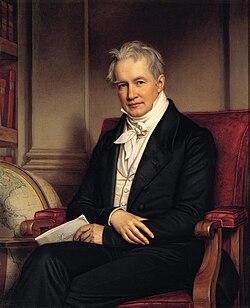
People often say that I'm curious about too many things at once. But can you really forbid a man from harboring a desire to know and embrace everything that surrounds him?

If there is a sin against life, it consists perhaps not so much in despairing of life as in hoping for another life and in eluding the implacable grandeur of this life.

There is a reality outside the world, that is to say, outside space and time, outside man's mental universe, outside any sphere whatsoever that is accessible to human faculties. Corresponding to this reality, at the centre of the human heart, is the longing for an absolute good, a longing which is always there and is never appeased by any object in this world. Another terrestrial manifestation of this reality lies in the absurd and insoluble contradictions which are always the terminus of human thought when it moves exclusively in this world. Just as the reality of this world is the sole foundation of facts, so that other reality is the sole foundation of good. That reality is the unique source of all the good that can exist in this world: that is to say, all beauty, all truth, all justice, all legitimacy, all order, and all human behaviour that is mindful of obligations. Those minds whose attention and love are turned towards that reality are the sole intermediary through which good can descend from there and come among men. Although it is beyond the reach of any human faculties, man has the power of turning his attention and love towards it. Nothing can ever justify the assumption that any man, whoever he may be, has been deprived of this power. It is a power which is only real in this world in so far as it is exercised. The sole condition for exercising it is consent. This act of consent may be expressed, or it may not be, even tacitly; it may not be clearly conscious, although it has really taken place in the soul. Very often it is verbally expressed although it has not in fact taken place. But whether expressed or not, the one condition suffices: that it shall in fact have taken place. To anyone who does actually consent to directing his attention and love beyond the world, towards the reality that exists outside the reach of all human faculties, it is given to succeed in doing so. In that case, sooner or later, there descends upon him a part of the good, which shines through him upon all that surrounds him.
You know I am not born to tread in the beaten track — the peculiar bent of my nature pushes me on.
All men seek happiness. This is without exception. Whatever different means they employ, they all tend to this end.
Do not spoil what you have by desiring what you have not; but remember that what you now have was once among the things only hoped for.