
If there is a sin against life, it consists perhaps not so much in despairing of life as in hoping for another life and in eluding the implacable grandeur of this life.

“I have an habitual feeling of my real life having past, and that I am leading a posthumous existence.”
If there is a sin against life, it consists perhaps not so much in despairing of life as in hoping for another life and in eluding the implacable grandeur of this life.

Most of us feel as if we lived habitually with a sort of cloud weighing on us, below our highest notch of clearness in discernment, sureness in reasoning, or firmness in deciding. Compared with what we ought to be, we are only half awake. Our fires are damped, our drafts are checked.

It appears to me impossible that I should cease to exist, or that this active, restless spirit, equally alive to joy and sorrow, should only be organised dust — ready to fly abroad the moment the spring snaps, or the spark goes out which kept it together. Surely something resides in this heart that is not perishable, and life is more than a dream.
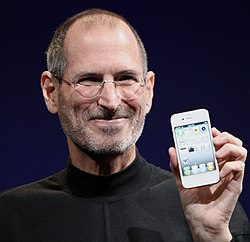
Think of your life as a rainbow arcing across the horizon of this world. You appear, have a chance to blaze in the sky, then you disappear. The two endpoints of everyone's rainbow are birth and death. We all experience both completely alone. And yet, most people of your age have not thought about these events very much, much less even seen them in others. It's as if we shelter you from them, afraid that the thought of mortality will somehow wound you. For me it's the opposite: to know my arc will fall makes me want to blaze while I am in the sky. Not for others, but for myself, for the trail I know I am leaving.

I have arrived. I am home. In the here, in the now. I am solid. I am free. In the ultimate I dwell.

There is nothing new under the sun.
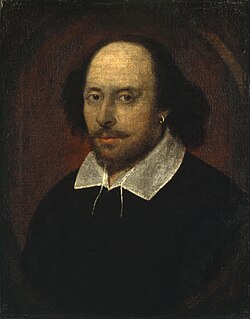
Tomorrow, and tomorrow, and tomorrow,Creeps in this petty pace from day to day,To the last syllable of recorded time;And all our yesterdays have lighted foolsThe way to dusty death. Out, out, brief candle!Life's but a walking shadow, a poor playerThat struts and frets his hour upon the stage,And then is heard no more. It is a taleTold by an idiot, full of sound and fury,Signifying nothing.
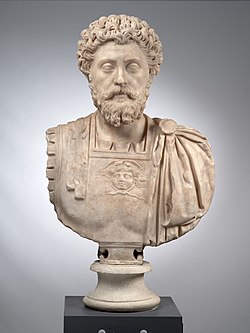
Remember that man lives only in the present, in this fleeting instant; all the rest of his life is either past and gone, or not yet revealed. Short, therefore, is man's life, and narrow is the corner of the earth wherein he dwells.
We are such stuff As dreams are made on; and our little life Is rounded with a sleep.

The present of things past is memory; the present of things present is sight; and the present of things future is expectation.

To live is not merely to breathe; it is to act, to make use of our organs, senses, faculties — of all those parts of ourselves which give us the feeling of existence.
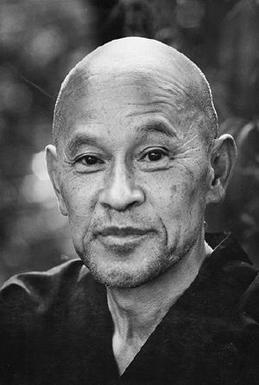
What we call 'I' is just a swinging door which moves when we inhale and when we exhale. It just moves; that is all. When your mind is pure and calm enough to follow this movement, there is nothing: no 'I,' no world, no mind nor body; just a swinging door.
He realized now that to be afraid of this death he was staring at with animal terror meant to be afraid of life. Fear of dying justified a limitless attachment to what is alive in man. And all those who had not made the gestures necessary to live their lives, all those who feared and exalted impotence — they were afraid of death because of the sanction it gave to a life in which they had not been involved. They had not lived enough, never having lived at all.

The scenes of life are like the pictures in a magic lantern: we see them, one after another, with vivid distinctness; but as soon as one vanishes, it is utterly forgotten; and then the next appears, completely different from what went before — though at bottom it is always the same story.

Even death is not to be feared by one who has lived wisely.

History will be kind to me for I intend to write it.
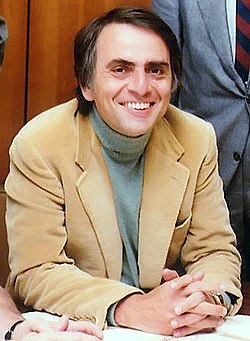
I would love to believe that when I die I will live again, that some thinking, feeling, remembering part of me will continue. But much as I want to believe that, and despite the ancient and worldwide cultural traditions that assert an afterlife, I know of nothing to suggest that it is more than wishful thinking. The world is so exquisite with so much love and moral depth, that there is no reason to deceive ourselves with pretty stories for which there's little good evidence. Far better it seems to me, in our vulnerability, is to look death in the eye and to be grateful every day for the brief but magnificent opportunity that life provides.

It matters not how a man dies, but how he lives. The act of dying is not of importance, it lasts so short a time.
Even if you're going to live three thousand more years, or thirty thousand, remember that nobody lives longer than they do right now, and that you can't live a longer past either. So the longest life and the shortest amount to the same thing. The present moment belongs to all alike, though the past is lost to one man and another hasn't yet reached it. You can only lose the present moment.
Yes, you can--if you do everything as if it were the last thing you were doing in your life, and stop being aimless, stop letting your emotions override what your mind tells you, stop being hypocritical, self-centered, irritable.
There is but one indefectibly certain truth, and that is the truth that pyrrhonistic scepticism itself leaves standing, — the truth that the present phenomenon of consciousness exists.

Time present and time past are both perhaps present in time future, and time future contained in time past.
Could the young but realize how soon they will become mere walking bundles of habits, they would give more heed to their conduct while in the plastic state. We are spinning our own fates, good or evil, and never to be undone.
The present moment contains past and future. The secret of transformation, is in the way we handle this very moment.

As a well-spent day brings happy sleep, so a life well spent brings happy death.