Echoes
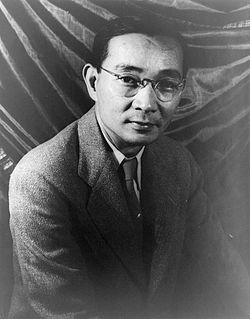
Lin Yutang
1937
“Culture, as I understand it, is essentially a product of leisure. The art of culture is therefore essentially the art of loafing.”
❧
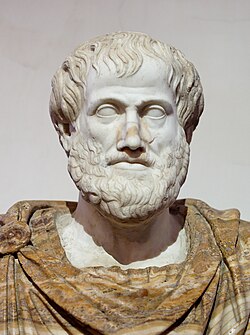
Happiness is thought to depend on leisure; for we are busy that we may have leisure, as we make war that we may live in peace.

A life of slothful ease, a life of that peace which springs merely from lack either of desire or of power to strive after great things, is as little worthy of a nation as of an individual. [...] If you are rich and are worth your salt, you will teach your sons that though they may have leisure, it is not to be spent in idleness; for wisely used leisure merely means that those who possess it, being free from the necessity of working for their livelihood, are all the more bound to carry on some kind of non-remunerative work in science, in letters, in art, in exploration, in historical research—work of the type we most need in this country, the successful carrying out of which reflects most honor upon the nation. We do not admire the man of timid peace. We admire the man who embodies victorious effort; the man who never wrongs his neighbor, who is prompt to help a friend, but who has those virile qualities necessary to win in the stern strife of actual life. It is hard to fail, but it is worse never to have tried to succeed. In this life we get nothing save by effort. Freedom from effort in the present merely means that there has been stored up effort in the past. A man can be freed from the necessity of work only by the fact that he or his fathers before him have worked to good purpose. If the freedom thus purchased is used aright, and the man still does actual work, though of a different kind, whether as a writer or a general, whether in the field of politics or in the field of exploration and adventure, he shows he deserves his good fortune. But if he treats this period of freedom from the need of actual labor as a period, not of preparation, but of mere enjoyment, even though perhaps not of vicious enjoyment, he shows that he is simply a cumberer of the earth's surface, and he surely unfits himself to hold his own with his fellows if the need to do so should again arise.

To have time was at once the most magnificent and the most dangerous of experiments. Idleness is fatal only to the mediocre.

You must sleep sometime between lunch and dinner, and no halfway measures. Take off your clothes and get into bed. That's what I always do. Don't think you will be doing less work because you sleep during the day. That's a foolish notion held by people who have no imagination. You will be able to accomplish more. You get two days in one — well, at least one and a half, I'm sure.

Work is no disgrace; it is idleness which is a disgrace.

Art is the symbol of the two noblest human efforts: to construct and to refrain from destruction.

So it comes about that if anyone spends almost the whole day in reading, and by way of relaxation devotes the intervals to some thoughtless pastime, he gradually loses the capacity for thinking; just as the man who always rides, at last forgets how to walk.
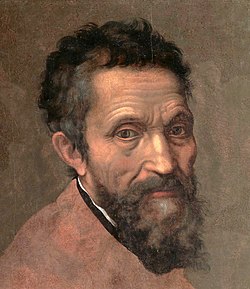
The best of artists has no conception that a single block of marble does not contain within itself, beneath its surface; only the hand that obeys the intellect can reach it.
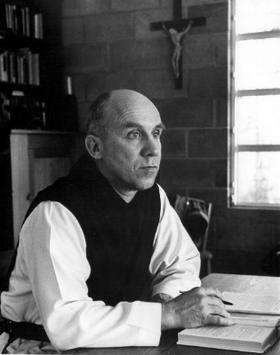
We are so obsessed with doing that we have no time and no imagination left for being. As a result, men are valued not for what they are but for what they do or what they have.
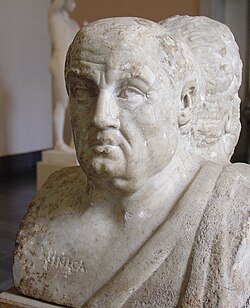
Love of bustle is not industry — it is only the restlessness of a hunted mind.

Tradition is a matter of much wider significance. It cannot be inherited, and if you want it you must obtain it by great labour. It involves, in the first place, the historical sense, which we may call nearly indispensable to anyone who would continue to be a poet beyond his twenty-fifth year; and the historical sense involves a perception, not only of the pastness of the past, but of its presence.
I don't pity any man who does hard work worth doing. I admire him. I pity the creature who does not work, at whichever end of the social scale he may regard himself as being.

I'm bothered by the arbitrariness and the thoughtlessness with which many things are produced and brought to market. We have too many unnecessary things everywhere.

I want to say, in all seriousness, that a great deal of harm is being done in the modern world by belief in the virtuousness of work, and that the road to happiness and prosperity lies in an organized diminution of work.
The secret to doing good research is always to be a little underemployed. You waste years by not being able to waste hours.
If you wish to have leisure for your mind, either be a poor man, or resemble a poor man. Study cannot be helpful unless you take pains to live simply; and living simply is voluntary poverty.

There are two kinds of pleasure: one consisting in a state of rest, in which both body and mind are undisturbed by any kind of pain; the other arising from an agreeable agitation of the senses, producing a correspondent emotion in the soul. It is upon the former of these that the enjoyment of life chiefly depends. Happiness may therefore be said to consist in bodily ease, and mental tranquility.

In pursuit of learning, every day something is acquired. In pursuit of Tao, every day something is dropped.

I must study politics and war, that my sons may have liberty to study mathematics and philosophy. My sons ought to study mathematics and philosophy, geography, natural history, naval architecture, navigation, commerce, and agriculture, in order to give their children a right to study painting, poetry, music, architecture, statuary, tapestry, and porcelain.
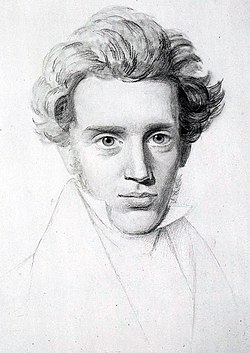
Boredom is the root of all evil — the despairing refusal to be oneself.
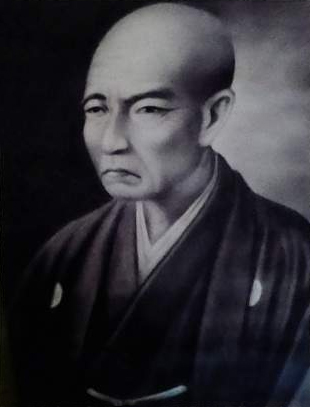
A person who is said to be proficient at the arts is like a fool. Because of his foolishness in concerning himself with just one thing, he thinks of nothing else and thus becomes proficient.

These sudden inspirations never happen except after some days of voluntary effort which has appeared absolutely fruitless. The role of this unconscious work in mathematical invention appears to me incontestable. Rest gives back to the mind its force and freshness.
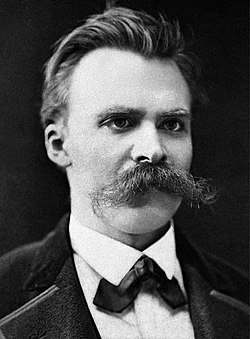
We do not belong to those who have ideas only among books, when stimulated by books. It is our habit to think outdoors — walking, leaping, climbing, dancing.
As designers, we have a great responsibility. I believe designers should eliminate the unnecessary. That means eliminating everything that is modish because this kind of thing is only short-lived.