Be a lamp unto yourself, be a refuge to yourself. Take yourself to no external refuge. Hold fast to the Truth as a lamp; hold fast to the Truth as a refuge.
Now this, bhikkhus, is the noble truth of suffering: birth is suffering, aging is suffering, illness is suffering, death is suffering; union with what is displeasing is suffering; separation from what is pleasing is suffering; not to get what one wants is suffering.
Just as a bird, wherever it goes, flies with its wings as its only burden, so too, the bhikkhu becomes content with robes to protect his body and with almsfood to maintain his stomach, and wherever he goes he sets out taking only these with him. Possessing this aggregate of noble virtue, he experiences within himself a bliss that is blameless.
 Fyodor Dostoevsky·1877
Brothers, have no fear of men's sin. Love a man even in his sin, for that is the semblance of Divine Love and is the highest love on earth. Love all God's creation, the whole of it and every grain of sand in it. Love every leaf, every ray of God's light. Love the animals, love the plants, love everything. If you love everything, you will perceive the divine mystery in things. Once you have perceived it, you will begin to comprehend it better every day, and you will come at last to love the world with an all-embracing love. Love the animals: God has given them the rudiments of thought and untroubled joy. So do not trouble it, do not harass them, do not deprive them of their joy, do not go against God's intent. Man, do not exhale yourself above the animals: they are without sin, while you in your majesty defile the earth by your appearance on it, and you leave the traces of your defilement behind you — alas, this is true of almost every one of us! Love children especially, for like the angels they too are sinless, and they live to soften and purify our hearts, and, as it were, to guide us. Woe to him who offends a child. My young brother asked even the birds to forgive him. It may sound absurd, but it is right none the less, for everything, like the ocean, flows and enters into contact with everything else: touch one place, and you set up a movement at the other end of the world. It may be senseless to beg forgiveness of the birds, but, then, it would be easier for the birds, and for the child, and for every animal if you were yourself more pleasant than you are now. Everything is like an ocean, I tell you. Then you would pray to the birds, too, consumed by a universal love, as though in ecstasy, and ask that they, too, should forgive your sin. Treasure this ecstasy, however absurd people may think it.
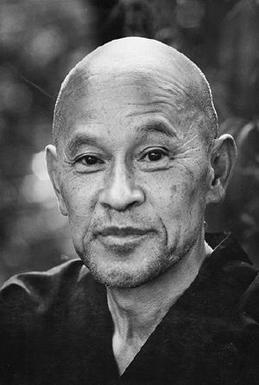 Shunryu Suzuki·1970
The basic teaching of Buddhism is the teaching of transiency or change. That everything changes is the basic truth for each existence. No one can deny this truth and all teaching of Buddhism is condensed within it. This is the teaching for all of us. Wherever we go this teaching is true. This teaching is also understood as the teaching of selflessness. Because each existence is in constant change, there is no abiding self.
 Confucius·497 BC
Before you embark on a journey of revenge, dig two graves.