
Echoes
Arthur Schopenhauer
1818
“Life swings like a pendulum backward and forward between pain and boredom.”
❧
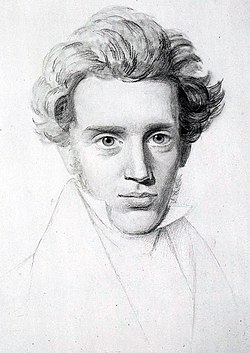
Boredom is the root of all evil — the despairing refusal to be oneself.

For in all adversity of fortune, the most unfortunate kind of misfortune is to have been happy.

The only thing that consoles us for our miseries is diversion. And yet it is the greatest of our miseries. For it is that above all which prevents us thinking about ourselves and leads us imperceptibly to destruction.

To every thing there is a season, and a time to every purpose under the heaven: A time to be born, and a time to die; a time to plant, and a time to pluck up that which is planted; A time to kill, and a time to heal; a time to break down, and a time to build up; A time to weep, and a time to laugh; a time to mourn, and a time to dance.

Poverty is a bitter thing; but it is not as bitter as the existence of restless vacuity and physical, moral, and intellectual flabbiness, to which those doom themselves who elect to spend all their years in that vainest of all vain pursuits—the pursuit of mere pleasure as a sufficient end in itself.

I leave Sisyphus at the foot of the mountain! One always finds one's burden again. But Sisyphus teaches the higher fidelity that negates the gods and raises rocks. He too concludes that all is well. This universe henceforth without a master seems to him neither sterile nor futile. Each atom of that stone, each mineral flake of that night filled mountain, in itself forms a world. The struggle itself toward the heights is enough to fill a man's heart. One must imagine Sisyphus happy.

Americans cleave to the things of this world as if assured that they will never die,… They clutch everything but hold nothing fast, and so lose grip as they hurry after some new delight. ... Death steps in in the end and stops him before he has grown tired of this futile pursuit of that complete felicity which always escapes him. At first sight there is something astonishing in this spectacle of so many lucky men restless in the midst of abundance. But it is a spectacle as old as the world; all that is new is to see a whole people performing in it.

Need and struggle are what excite and inspire us; our hour of triumph is what brings the void. Not the Jews of the captivity, but those of the days of Solomon's glory are those from whom the pessimistic utterances in our Bible come.

It may be observed, that provinces amid the vicissitudes to which they are subject, pass from order into confusion, and afterward recur to a state of order again; for the nature of mundane affairs not allowing them to continue in an even course, when they have arrived at their greatest perfection, they soon begin to decline. In the same manner, having been reduced by disorder, and sunk to their utmost state of depression, unable to descend lower, they, of necessity, reascend; and thus from good they gradually decline to evil, and from evil again return to good. The reason is, that valor produces peace; peace, repose; repose, disorder; disorder, ruin; so from disorder order springs; from order virtue, and from this, glory and good fortune.

Tomorrow, and tomorrow, and tomorrow,Creeps in this petty pace from day to day,To the last syllable of recorded time;And all our yesterdays have lighted foolsThe way to dusty death. Out, out, brief candle!Life's but a walking shadow, a poor playerThat struts and frets his hour upon the stage,And then is heard no more. It is a taleTold by an idiot, full of sound and fury,Signifying nothing.

Life will have terrible blows, horrible blows, unfair blows. It doesn't matter. And some people recover and others don't. There I think the attitude of Epictetus is the best. He thought that every mischance in life was an opportunity to behave well — an opportunity to learn something.

Our sadness is not sad, but our cheap joys.
The practically cognized present is no knife-edge, but a saddle-back, with a certain breadth of its own on which we sit perched, and from which we look in two directions into time. The unit of composition of our perception of time is a duration, with a bow and a stern, as it were — a rearward- and a forward-looking end.
To be or not to be, that is the question.
There is not love of life without despair about life.

Feelings come and go like clouds in a windy sky. Conscious breathing is my anchor.

Everything can collapse. Houses, bodies, and enemies collapse when their rhythm becomes deranged.

Movement never lies. It is a barometer telling the state of the soul's weather to all who can read it.

The beauty of the world which is so soon to perish, has two edges, one of laughter, one of anguish, cutting the heart asunder.

Your pain is the breaking of the shell that encloses your understanding. Even as the stone of the fruit must break, that its heart may stand in the sun, so must you know pain.
It is the nature of human affairs to be fraught with anxiety; they never prosper perfectly, and they never remain constant.

Of all men's miseries the bitterest is this: to know so much and to have control over nothing.

I must hold in balance the sense of the futility of effort and the sense of the necessity to struggle; the conviction of the inevitability of failure and still the determination to 'succeed'.
To have time was at once the most magnificent and the most dangerous of experiments. Idleness is fatal only to the mediocre.