Custom is our nature. What are our natural principles but principles of custom? I am much afraid that nature is itself only a first custom, as custom is a second nature.
Man is but a reed, the most feeble thing in nature; but he is a thinking reed.
The eternal silence of these infinite spaces frightens me.
 Blaise Pascal·1670
All of humanity's problems stem from man's inability to sit quietly in a room alone.
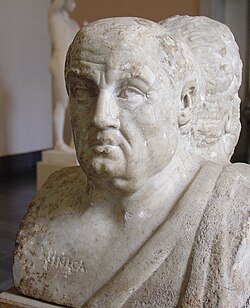 Seneca·63 AD
We suffer more often in imagination than in reality.
 Albert Camus·1955
It is the failing of a certain literature to believe that life is tragic because it is wretched. Life can be magnificent and overwhelming — that is its whole tragedy. Without beauty, love, or danger it would be almost easy to live. And M. Sartre's hero does not perhaps give us the real meaning of his anguish when he insists on those aspects of man he finds repugnant, instead of basing his reasons for despair on certain of man's signs of greatness. The realization that life is absurd cannot be an end, but only a beginning. This is a truth nearly all great minds have taken as their starting point. It is not this discovery that is interesting, but the consequences and rules of action drawn from it.