
Echoes
Blaise Pascal
1670
“The only thing that consoles us for our miseries is diversion. And yet it is the greatest of our miseries. For it is that above all which prevents us thinking about ourselves and leads us imperceptibly to destruction.”
❧
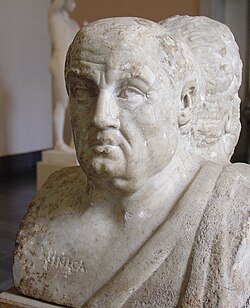
We suffer more often in imagination than in reality.

It is the failing of a certain literature to believe that life is tragic because it is wretched. Life can be magnificent and overwhelming — that is its whole tragedy. Without beauty, love, or danger it would be almost easy to live. And M. Sartre's hero does not perhaps give us the real meaning of his anguish when he insists on those aspects of man he finds repugnant, instead of basing his reasons for despair on certain of man's signs of greatness. The realization that life is absurd cannot be an end, but only a beginning. This is a truth nearly all great minds have taken as their starting point. It is not this discovery that is interesting, but the consequences and rules of action drawn from it.

There is no wisdom in useless and hopeless sorrow; but there is something in it so like virtue, that he who is wholly without it cannot be loved.
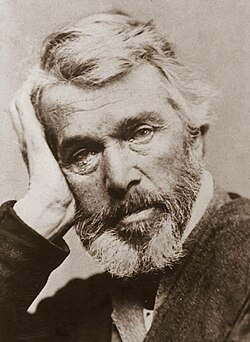
Work is the grand cure of all the maladies and miseries that ever beset mankind — honest work, which you intend getting done.

Americans cleave to the things of this world as if assured that they will never die,… They clutch everything but hold nothing fast, and so lose grip as they hurry after some new delight. ... Death steps in in the end and stops him before he has grown tired of this futile pursuit of that complete felicity which always escapes him. At first sight there is something astonishing in this spectacle of so many lucky men restless in the midst of abundance. But it is a spectacle as old as the world; all that is new is to see a whole people performing in it.

The great source of both the misery and disorders of human life, seems to arise from over-rating the difference between one permanent situation and another. Avarice over-rates the difference between poverty and riches: ambition, that between a private and a public station: vain-glory, that between obscurity and extensive reputation. The person under the influence of any of those extravagant passions, is not only miserable in his actual situation, but is often disposed to disturb the peace of society, in order to arrive at that which he so foolishly admires. The slightest observation, however, might satisfy him, that, in all the ordinary situations of human life, a well-disposed mind may be equally calm, equally cheerful, and equally contented. Some of those situations may, no doubt, deserve to be preferred to others: but none of them can deserve to be pursued with that passionate ardour which drives us to violate the rules either of prudence or of justice; or to corrupt the future tranquillity of our minds, either by shame from the remembrance of our own folly, or by remorse from the horror of our own injustice.
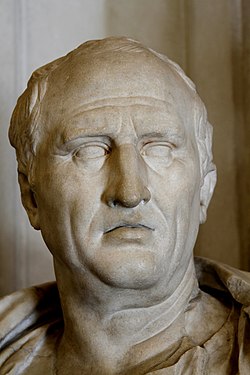
For philosophy accomplishes this: it heals the mind, removes empty anxieties, frees from desires, and drives away fears.

Comparison is the thief of joy.

Plain savors bring us a pleasure equal to a luxurious diet, when all the pain due to want is removed; and bread and water produce the highest pleasure, when one who needs them puts them to his lips.
I leave Sisyphus at the foot of the mountain! One always finds one's burden again. But Sisyphus teaches the higher fidelity that negates the gods and raises rocks. He too concludes that all is well. This universe henceforth without a master seems to him neither sterile nor futile. Each atom of that stone, each mineral flake of that night filled mountain, in itself forms a world. The struggle itself toward the heights is enough to fill a man's heart. One must imagine Sisyphus happy.

A man who lies to himself, and believes his own lies, becomes unable to recognize truth, either in himself or in anyone else, and he ends up losing respect for himself and for others. When he has no respect for anyone, he can no longer love, and in him, he yields to his impulses, indulges in the lowest form of pleasure, and behaves in the end like an animal in satisfying his vices. And it all comes from lying — to others and to yourself.
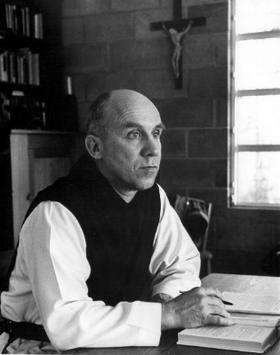
Not all of us are called to be hermits, but all of us need enough silence and solitude to enable the deeper voice of our own self to be heard.

In the presence of nature, a wild delight runs through the man, in spite of real sorrows. Nature says, — he is my creature, and maugre all his impertinent griefs, he shall be glad with me. Not the sun or the summer alone, but every hour and season yields its tribute of delight; for every hour and change corresponds to and authorizes a different state of the mind, from breathless noon to grimmest midnight.

Therefore, this terror of the mind and the darkness must be dispelled not by the rays of the sun or the bright light of day, but by the appearance and reasoning of nature.

Everything is funny as long as it is happening to somebody else.
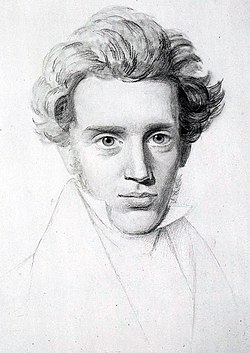
Boredom is the root of all evil — the despairing refusal to be oneself.

Life swings like a pendulum backward and forward between pain and boredom.

If a man insisted always on being serious, and never allowed himself a bit of fun and relaxation, he would go mad or become unstable without knowing it.
Hope is necessary in every condition. The miseries of poverty, of sickness, or captivity, would, without this comfort, be insupportable; nor does it appear that the happiest lot of terrestrial existence can set us above the want of this general blessing; or that life, when the gifts of nature and of fortune are accumulated upon it, would not still be wretched, were it not elevated and delighted by the expectation of some new possession, of some enjoyment yet behind, by which the wish shall at last be satisfied, and the heart filled up to its utmost extent.

Our sadness is not sad, but our cheap joys.
If there is a sin against life, it consists perhaps not so much in despairing of life as in hoping for another life and in eluding the implacable grandeur of this life.

It is good for us that we sometimes have sorrows and adversities, for they often make a man lay to heart that he is only a stranger and sojourner, and may not put his trust in any worldly thing. It is good that we sometimes endure contradictions, and are hardly and unfairly judged, when we do and mean what is good. For these things help us to be humble, and shield us from vain-glory.

The effect of life in society is to complicate and confuse our existence, making us forget who we really are by causing us to become preoccupied with what we are not.

If there is a meaning in life at all, then there must be a meaning in suffering. Suffering is an ineradicable part of life, even as fate and death.