Echoes
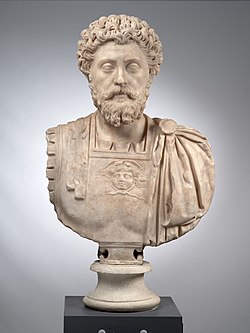
Marcus Aurelius
170 AD
“Very little is needed to make a happy life; it is all within yourself, in your way of thinking.”
❧
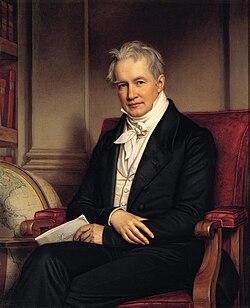
I am more and more convinced that our happiness or unhappiness depends far more on the way we meet the events of life than on the nature of those events themselves.

In a word, neither death, nor exile, nor pain, nor anything of this kind is the real cause of our doing or not doing any action, but our inward opinions and principles.

If in our daily life we can smile, if we can be peaceful and happy, not only we, but everyone will profit from it. If we really know how to live, what better way to start the day than with a smile? Our smile affirms our awareness and determination to live in peace and joy. The source of a true smile is an awakened mind.

The man who is aware of himself is henceforward independent; and he is never bored, and life is only too short, and he is steeped through and through with a profound yet temperate happiness.
The happiness of your life depends upon the quality of your thoughts.

If your daily life seems poor, do not blame it; blame yourself, tell yourself that you are not poet enough to call forth its riches.
You have power over your mind — not outside events. Realize this, and you will find strength.
But true good fortune is what you make for yourself. Good fortune: good character, good intentions, and good actions.
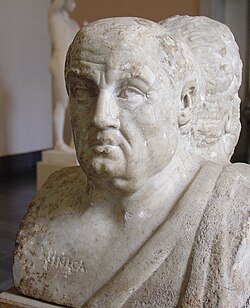
You need a change of soul rather than a change of climate.
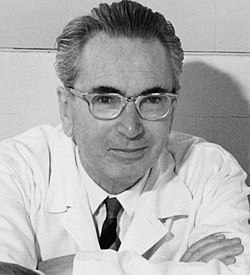
Everything can be taken from a man but one thing: the last of the human freedoms — to choose one's attitude in any given set of circumstances, to choose one's own way.

There are two things that I want you to make up your minds to: first, that you are going to have a good time as long as you live – I have no use for the sour-faced man – and next, that you are going to do something worthwhile, that you are going to work hard and do the things you set out to do.

With an eye made quiet by the power of harmony, and the deep power of joy, we see into the life of things.

Though the whole world should praise him, he would not be stimulated to greater endeavour, and though the whole world should condemn him, he would not be depressed. So fixed was he in the difference between the internal judgement of himself and the external judgement of others.
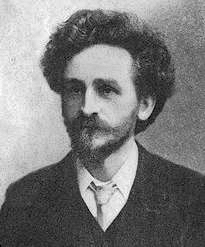
All that a man achieves and all that he fails to achieve is the direct result of his own thoughts.

What can be added to the happiness of a man who is in health, out of debt, and has a clear conscience?

To be happy at home is the ultimate result of all ambition, the end to which every enterprise and labour tends, and of which every desire prompts the prosecution.

I have had three personal ideals: One to do the day's work well and not to bother about tomorrow. You may say that is not a satisfactory ideal. It is; and there is not one which the student can carry with him into practice with greater effect. To it more than anything else I owe whatever success I have had — to this power of settling down to the day's work and trying to do it well to the best of my ability, and letting the future take care of itself. The second ideal has been to act the Golden Rule, as far as in me lay, toward my professional brethren and toward the patients committed to my care. And the third has been to cultivate such a measure of equanimity as would enable me to bear success with humility, the affection of my friends without pride, and to be ready when the day of sorrow and grief came, to meet it with the courage befitting a man. What the future has in store for me, I cannot tell — you cannot tell. Nor do I care much, so long as I carry with me, as I shall, the memory of the past you have given me. Nothing can take that away.
Cherish that which is within you, and shut off that which is without; for much knowledge is a curse.
How easy it is to repel and to wipe away every impression which is troublesome or unsuitable, and immediately to be in all tranquility.

A man contains all that is needful to his government within himself. He is made a law unto himself. All real good or evil that can befal [sic] him must be from himself. He only can do himself any good or any harm. Nothing can be given to him or can taken from him but always there is a compensation.. There is a correspondence between the human soul and everything that exists in the world; more properly, everything that is known to man. Instead of studying things without the principles of them, all may be penetrated unto with him. Every act puts the agent in a new position. The purpose of life seems to be to acquaint a man with himself. He is not to live the future as described to him but to live the real future to the real present. The highest revelation is that God is in every man.

O God, give us the serenity to accept what cannot be changed, the courage to change what should be changed, and the wisdom to distinguish the one from the other.
Some things are in our control and others not. Things in our control are opinion, pursuit, desire, aversion, and, in a word, whatever are our own actions. Things not in our control are body, property, reputation, command, and, in one word, whatever are not our own actions. (1).
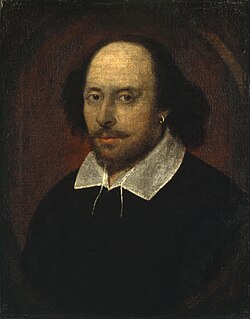
Men at some time are masters of their fates:The fault, dear Brutus, is not in our stars,But in ourselves, that we are underlings.
The primary indication, to my thinking, of a well-ordered mind is a man's ability to remain in one place and linger in his own company.