
Every Israelite has a duty to study whether he is poor or rich, whether healthy or suffering, whether young or very old and in failing strength, even if he is poor and supported by charity or begs from door to door.

“There is a time in every man's education when he arrives at the conviction that envy is ignorance; that imitation is suicide; that he must take himself for better, for worse, as his portion; that though the wide universe is full of good, no kernel of nourishing corn can come to him but through his toil bestowed on that plot of ground which is given to him to till.”
Every Israelite has a duty to study whether he is poor or rich, whether healthy or suffering, whether young or very old and in failing strength, even if he is poor and supported by charity or begs from door to door.
A man should learn to detect and watch that gleam of light which flashes across his mind from within, more than the lustre of the firmament of bards and sages. Yet he dismisses without notice his thought, because it is his. In every work of genius we recognize our own rejected thoughts: they come back to us with a certain alienated majesty.
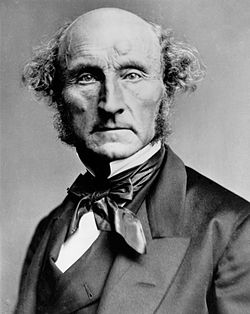
He who lets the world, or his own portion of it, choose his plan of life for him, has no need of any other faculty than the ape-like one of imitation. He who chooses his plan for himself, employs all his faculties. He must use observation to see, reasoning and judgment to foresee, activity to gather materials for decision, discrimination to decide, and when he has decided, firmness and self-control to hold to his deliberate decision.
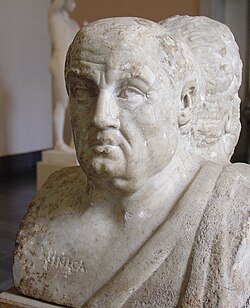
We should follow, men say, the example of the bees, who flit about and cull the flowers that are suitable for producing honey, and then arrange and assort in their cells all that they have brought in. We too should so blend whatever we have gathered from a varied course of reading, that it may be all the clearer for being drawn from many sources; and then, by applying the supervising care with which our nature has endowed us, we should so blend those several flavors into one delicious compound that, even though it betrays its origin, yet it nevertheless is clearly a different thing from that whence it came.

Better be wise by the misfortunes of others than by your own.

To explain all nature is too difficult a task for any one man or even for any one age. 'Tis much better to do a little with certainty, & leave the rest for others that come after you, than to explain all things by conjecture without making sure of any thing.
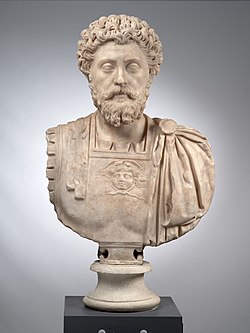
Begin the morning by saying to thyself: I shall meet with the busy-body, the ungrateful, arrogant, deceitful, envious, unsocial. All these things happen to them by reason of their ignorance of what is good and evil. But I, who have seen the nature of the good, that it is beautiful, and of the bad, that it is ugly, can neither be injured by any of them, nor be angry with my kinsman.

Admiration is the foundation of all philosophy, inquisition the progress, ignorance the end.

My Soul gave me good counsel, teaching me never to delight in praise or to be distressed by reproach. Before my Soul taught me, I doubted the value of my accomplishments until the passing days sent someone who would extol or disparage them. But now I know that trees blossom in the spring and give their fruits in the summer without any desire for accolades. And they scatter their leaves abroad in the fall and denude themselves in the winter without fear of reproof.
He needs no library, for he has not done thinking; no church, for he is himself a prophet; no statute book, for he hath the Lawgiver; no money, for he is value itself; no road, for he is at home where he is.
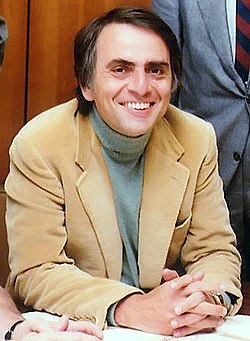
The way to find out about our place in the universe is by examining the universe and by examining ourselves—without preconceptions, with as unbiased a mind as we can muster. We cannot begin with an entirely clean slate, since we arrive at this problem with predispositions of hereditary and environmental origin; but, after understanding such built-in biases, is it not possible to pry insights from nature?
There is no reason why poverty should call us away from philosophy—no, nor even actual want. For when hastening after wisdom, we must endure even hunger. Men have endured hunger when their towns were besieged, and what other reward for their endurance did they obtain than that they did not fall under the conqueror’s power? How much greater is the promise of the prize of everlasting liberty, and the assurance that we need fear neither God nor man! Even though we starve, we must reach that goal.
The world is nothing, the man is all; in yourself is the law of all nature, and you know not yet how a globule of sap ascends; in yourself slumbers the whole of Reason; it is for you to know all, it is for you to dare all.

If thou desire to profit, read with humility, simplicity, and faithfulness; nor even desire the repute of learning.

Do not seek to follow in the footsteps of the wise; seek what they sought.

No man is entirely free from weakness and imperfection in this life. Men of the most exalted genius and active minds are generally most perfect slaves to the love of fame. They sometimes descend to as mean tricks and artifices in pursuit of honor or reputation as the miser descends to in pursuit of gold.

The only true wisdom is in knowing you know nothing.

Cherish that which is within you, and shut off that which is without; for much knowledge is a curse.
Great truths do not take hold of the hearts of the masses...And now, as all the world is in error, I, though I know the true path,—how shall I guide? If I know that I cannot succeed and yet try to force success, this would be but another source of error. Better, then, to desist and strive no more. But if I strive not, who will?
You will hear every day the maxims of a low prudence. You will hear, that the first duty is to get land and money, place and name. "What is this Truth you seek? What is this Beauty?" men will ask, with derision. If, nevertheless, God have called any of you to explore truth and beauty, be bold, be firm, be true. When you shall say, "As others do, so will I. I renounce, I am sorry for it, my early visions; I must eat the good of the land, and let learning and romantic expectations go, until a more convenient season." — then dies the man in you; then once more perish the buds of art, and poetry, and science, as they have died already in a thousand thousand men. The hour of that choice is the crisis of your history; and see that you hold yourself fast by the intellect. ... Bend to the persuasion which is flowing to you from every object in Nature, to be its tongue to the heart of man, and to show the besotted world how passing fair is wisdom.
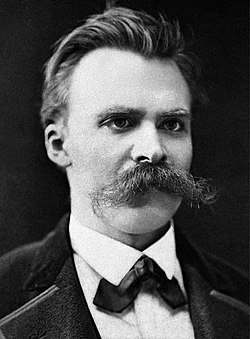
For believe me! — the secret for harvesting from existence the greatest fruitfulness and the greatest enjoyment is — to live dangerously! Build your cities on the slopes of Vesuvius! Send your ships into uncharted seas! Live at war with your peers and yourselves! Be robbers and conquerors as long as you cannot be rulers and possessors, you seekers of knowledge!

If your daily life seems poor, do not blame it; blame yourself, tell yourself that you are not poet enough to call forth its riches.

If you want to improve, be content to be thought foolish and stupid.

This is the Way for men who want to learn my strategy: Do not think dishonestly. The Way is in training. Become acquainted with every art. Know the Ways of all professions. Distinguish between gain and loss in worldly matters. Develop intuitive judgment and understanding for everything. Perceive those things which cannot be seen. Pay attention even to trifles. Do nothing which is of no use.

It seems to me that the simple acceptance of this fundamental fact of American life, this acknowledgment that the law of work is the fundamental law of our being, will help us to start aright in facing not a few of the problems that confront us from without and from within. As regards internal affairs, it should teach us the prime need of remembering that, after all has been said and done, the chief factor in any man's success or failure must be his own character—that is, the sum of his common sense, his courage, his virile energy and capacity. Nothing can take the place of this individual factor.