
Echoes
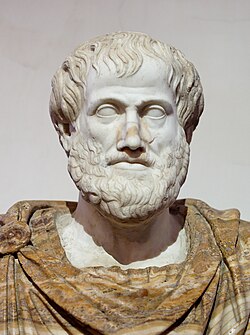
Aristotle
-325 AD
“Happiness is thought to depend on leisure; for we are busy that we may have leisure, as we make war that we may live in peace.”
❧

There are two kinds of pleasure: one consisting in a state of rest, in which both body and mind are undisturbed by any kind of pain; the other arising from an agreeable agitation of the senses, producing a correspondent emotion in the soul. It is upon the former of these that the enjoyment of life chiefly depends. Happiness may therefore be said to consist in bodily ease, and mental tranquility.

A life of slothful ease, a life of that peace which springs merely from lack either of desire or of power to strive after great things, is as little worthy of a nation as of an individual. [...] If you are rich and are worth your salt, you will teach your sons that though they may have leisure, it is not to be spent in idleness; for wisely used leisure merely means that those who possess it, being free from the necessity of working for their livelihood, are all the more bound to carry on some kind of non-remunerative work in science, in letters, in art, in exploration, in historical research—work of the type we most need in this country, the successful carrying out of which reflects most honor upon the nation. We do not admire the man of timid peace. We admire the man who embodies victorious effort; the man who never wrongs his neighbor, who is prompt to help a friend, but who has those virile qualities necessary to win in the stern strife of actual life. It is hard to fail, but it is worse never to have tried to succeed. In this life we get nothing save by effort. Freedom from effort in the present merely means that there has been stored up effort in the past. A man can be freed from the necessity of work only by the fact that he or his fathers before him have worked to good purpose. If the freedom thus purchased is used aright, and the man still does actual work, though of a different kind, whether as a writer or a general, whether in the field of politics or in the field of exploration and adventure, he shows he deserves his good fortune. But if he treats this period of freedom from the need of actual labor as a period, not of preparation, but of mere enjoyment, even though perhaps not of vicious enjoyment, he shows that he is simply a cumberer of the earth's surface, and he surely unfits himself to hold his own with his fellows if the need to do so should again arise.
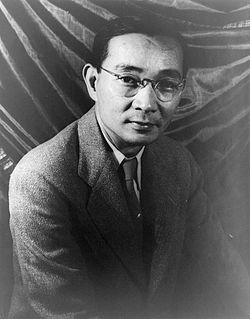
If you can spend a perfectly useless afternoon in a perfectly useless manner, you have learned how to live.
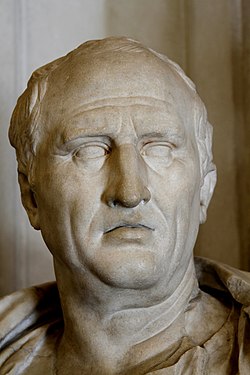
We place the happy life in the security of the mind and in freedom from all obligations.
For some identify happiness with virtue, some with practical wisdom, others with a kind of philosophic wisdom, others with these, or one of these, accompanied by pleasure or not without pleasure; while others include also external prosperity. Now ... it is not probable that these should be entirely mistaken, but rather that they should be right in at least some one respect or even in most respects.
Culture, as I understand it, is essentially a product of leisure. The art of culture is therefore essentially the art of loafing.

Happiness is not a goal, it is a by-product. Paradoxically, the one sure way not to be happy is deliberately to map out a way of life in which one would please oneself completely and exclusively.

To have time was at once the most magnificent and the most dangerous of experiments. Idleness is fatal only to the mediocre.

Do not seek pleasure for its own sake.

You shall have joy, or you shall have power, said God; you shall not have both.

As a well-spent day brings happy sleep, so life well used brings happy death.

If a man insisted always on being serious, and never allowed himself a bit of fun and relaxation, he would go mad or become unstable without knowing it.

A crust eaten in peace is better than a banquet partaken in anxiety.

The great source of both the misery and disorders of human life, seems to arise from over-rating the difference between one permanent situation and another. Avarice over-rates the difference between poverty and riches: ambition, that between a private and a public station: vain-glory, that between obscurity and extensive reputation. The person under the influence of any of those extravagant passions, is not only miserable in his actual situation, but is often disposed to disturb the peace of society, in order to arrive at that which he so foolishly admires. The slightest observation, however, might satisfy him, that, in all the ordinary situations of human life, a well-disposed mind may be equally calm, equally cheerful, and equally contented. Some of those situations may, no doubt, deserve to be preferred to others: but none of them can deserve to be pursued with that passionate ardour which drives us to violate the rules either of prudence or of justice; or to corrupt the future tranquillity of our minds, either by shame from the remembrance of our own folly, or by remorse from the horror of our own injustice.

To be happy at home is the ultimate result of all ambition, the end to which every enterprise and labour tends, and of which every desire prompts the prosecution.
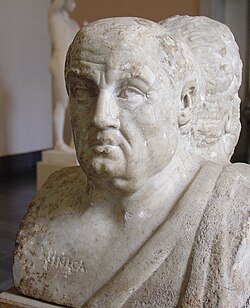
The mind must be given relaxation — it will rise improved and sharper after a good rest. Just as we must not force fertile farmland, for uninterrupted productivity will soon exhaust it, so constant effort will sap our mental vigor.
If you wish to have leisure for your mind, either be a poor man, or resemble a poor man. Study cannot be helpful unless you take pains to live simply; and living simply is voluntary poverty.
The noblest pleasure is the joy of understanding.

Americans cleave to the things of this world as if assured that they will never die,… They clutch everything but hold nothing fast, and so lose grip as they hurry after some new delight. ... Death steps in in the end and stops him before he has grown tired of this futile pursuit of that complete felicity which always escapes him. At first sight there is something astonishing in this spectacle of so many lucky men restless in the midst of abundance. But it is a spectacle as old as the world; all that is new is to see a whole people performing in it.
For success, like happiness, cannot be pursued; it must ensue, and it only does so as the unintended side-effect of one's dedication to a cause greater than oneself or as the by-product of one's surrender to a person other than oneself.
Happiness depends on being free, and freedom depends on being courageous.
In ease of body and peace of mind, all the different ranks of life are nearly upon a level, and the beggar, who suns himself by the side of the highway, possesses that security which kings are fighting for.

How we spend our days is, of course, how we spend our lives.
Blessed is he who has found his work; let him ask no other blessedness.