
When one cultivates to the utmost the principles of his nature, and exercises them on the principle of reciprocity, he is not far from the path. What you do not like when done to yourself, do not do to others.

“Let us speak courteously, deal fairly, and keep ourselves armed and ready.”
When one cultivates to the utmost the principles of his nature, and exercises them on the principle of reciprocity, he is not far from the path. What you do not like when done to yourself, do not do to others.

Students, when you want to say something, think about it three times before you say it. Speak only if your words will benefit yourselves and others. Do not speak if it brings no benefit.
The man of perfect virtue is cautious and slow in his speech. When a man feels the difficulty of doing, can he be other than cautious and slow in speaking?
Don't let anyone impose on you. Don't be quarrelsome, but stand up for your rights. If you've got to fight, fight hard and well. To my mind, a coward is the only thing meaner than a liar.
Right here let me make as vigorous a plea as I know how in favor of saying nothing that we do not mean, and of acting without hesitation up to whatever we say. A good many of you are probably acquainted with the old proverb: "Speak softly and carry a big stick—you will go far." If a man continually blusters, if he lacks civility, a big stick will not save him from trouble; and neither will speaking softly avail, if back of the softness there does not lie strength, power.
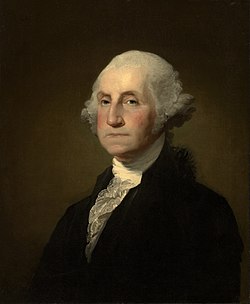
Be courteous to all, but intimate with few, and let those few be well tried before you give them your confidence; true friendship is a plant of slow growth, and must undergo and withstand the shocks of adversity before it is entitled to the appellation.

Know how to refuse. One ought not to give way in everything nor to everybody.

We have to face the fact that either all of us are going to die together or we are going to learn to live together and if we are to live together we have to talk.
It is not fair to ask of others what you are unwilling to do yourself.
I have always been fond of the West African proverb "Speak softly and carry a big stick; you will go far."

Read not to contradict and confute; nor to believe and take for granted; nor to find talk and discourse; but to weigh and consider.
Be courteous to all, but intimate with few.

O God, give us the serenity to accept what cannot be changed, the courage to change what should be changed, and the wisdom to distinguish the one from the other.
To borrow a simile from the football field, we believe that men must play fair, but that there must be no shirking, and that the success can only come to the player who hits the line hard.

Whoever gives reverence receives reverence.

I rely on two precedents: first, to similar cases our Sages applied the verse, "It is time to do something in honour of the Lord: for they have made void thy law"... Secondly, they have said, "Let all thy acts be guided by pure intentions." ...Lastly, when I have a difficult subject before me—when I find the road narrow, and can see no other way of teaching a well established truth except by pleasing one intelligent man and displeasing ten thousand fools—I prefer to address myself to the one man, and to take no notice whatever of the condemnation of the multitude; I prefer to extricate that intelligent man from his embarrassment and show him the cause of his perplexity, so that he may attain perfection and be at peace.

To account nothing of one’s self, and to think always kindly and highly of others, this is great and perfect wisdom.
Speak softly and carry a big stick; you will go far.

When you have decided that a thing ought to be done and are doing it, never avoid being seen doing it, though many shall form an unfavorable opinion about it. For if it is not right, avoid doing the thing; but if it is right, why are you afraid of those who shall find fault wrongly?
We must see that there is civic honesty, civic cleanliness, civic good sense in our home administration of city, State, and nation. We must strive for honesty in office, for honesty toward the creditors of the nation and of the individual; for the widest freedom of individual initiative where possible, and for the wisest control of individual initiative where it is hostile to the welfare of the many. But because we set our own household in order we are not thereby excused from playing our part in the great affairs of the world. A man's first duty is to his own home, but he is not thereby excused from doing his duty to the State; for if he fails in this second duty it is under the penalty of ceasing to be a freeman. In the same way, while a nation's first duty is within its own borders, it is not thereby absolved from facing its duties in the world as a whole; and if it refuses to do so, it merely forfeits its right to struggle for a place among the peoples that shape the destiny of mankind.
The man of virtue makes the difficulty to be overcome his first business, and success only a subsequent consideration.

Never give in — never, never, never, never, in nothing great or small, large or petty, never give in except to convictions of honour and good sense. Never yield to force; never yield to the apparently overwhelming might of the enemy.

There are two sentences inscribed upon the Delphic oracle, hugely accommodated to the usages of man's life: "Know thyself," and "Nothing too much;" and upon these all other precepts depend.

I have had three personal ideals: One to do the day's work well and not to bother about tomorrow. You may say that is not a satisfactory ideal. It is; and there is not one which the student can carry with him into practice with greater effect. To it more than anything else I owe whatever success I have had — to this power of settling down to the day's work and trying to do it well to the best of my ability, and letting the future take care of itself. The second ideal has been to act the Golden Rule, as far as in me lay, toward my professional brethren and toward the patients committed to my care. And the third has been to cultivate such a measure of equanimity as would enable me to bear success with humility, the affection of my friends without pride, and to be ready when the day of sorrow and grief came, to meet it with the courage befitting a man. What the future has in store for me, I cannot tell — you cannot tell. Nor do I care much, so long as I carry with me, as I shall, the memory of the past you have given me. Nothing can take that away.
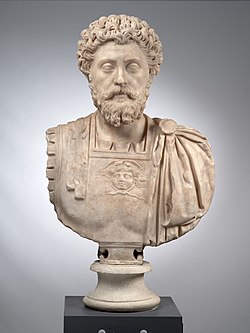
Everything that happens is either endurable or not. If it's endurable, then endure it. Stop complaining. If it's unendurable . . . then stop complaining. Your destruction will mean its end as well.