
It is pleasant, with the sea raging under the winds, to gaze upon the great struggles of another from the land.

“I pass with relief from the tossing sea of Cause and Theory to the firm ground of Result and Fact.”
It is pleasant, with the sea raging under the winds, to gaze upon the great struggles of another from the land.

The fashion of this world passeth away and I would fain occupy myself with the things that are abiding.

I have not been able to discover the cause of those properties of gravity from phenomena, and I frame no hypotheses; for whatever is not deduced from the phenomena is to be called a hypothesis, and hypotheses, whether metaphysical or physical, whether of occult qualities or mechanical, have no place in experimental philosophy.

I wiped away the weeds and foam, And fetched my sea-born treasures home; But the poor, unsightly, noisome things Had left their beauty on the shore With the sun, and the sand, and the wild uproar.
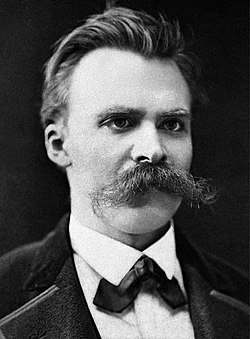
We do not belong to those who have ideas only among books, when stimulated by books. It is our habit to think outdoors — walking, leaping, climbing, dancing.

My life is like a stroll upon the beach, As near the ocean's edge as I can go.

I don't know whether Napoleon did or did not try to get across there and I don't care. I don't know much about history, and I wouldn't give a nickel for all the history in the world. It means nothing to me. History is more or less bunk. It's tradition. We don't want tradition. We want to live in the present and the only history that is worth a tinker's damn is the history we make today.

There is no area in our minds reserved for superstition, such as the Greeks had in their mythology; and superstition, under cover of an abstract vocabulary, has revenged itself by invading the entire realm of thought. Our science is like a store filled with the most subtle intellectual devices for solving the most complex problems, and yet we are almost incapable of applying the elementary principles of rational thought. In every sphere, we seem to have lost the very elements of intelligence: the ideas of limit, measure, degree, proportion, relation, comparison, contingency, interdependence, interrelation of means and ends. To keep to the social level, our political universe is peopled exclusively by myths and monsters; all it contains is absolutes and abstract entities. This is illustrated by all the words of our political and social vocabulary: nation, security, capitalism, communism, fascism, order, authority, property, democracy. We never use them in phrases such as: There is democracy to the extent that... or: There is capitalism in so far as... The use of expressions like "to the extent that" is beyond our intellectual capacity. Each of these words seems to represent for us an absolute reality, unaffected by conditions, or an absolute objective, independent of methods of action, or an absolute evil; and at the same time we make all these words mean, successively or simultaneously, anything whatsoever. Our lives are lived, in actual fact, among changing, varying realities, subject to the casual play of external necessities, and modifying themselves according to specific conditions within specific limits; and yet we act and strive and sacrifice ourselves and others by reference to fixed and isolated abstractions which cannot possibly be related either to one another or to any concrete facts. In this so-called age of technicians, the only battles we know how to fight are battles against windmills.

The Tao is like a bellows: it is empty yet infinitely capable. The more you use it, the more it produces; the more you talk of it, the less you understand.

For all that has been said of the love that certain natures have professed to feel for it, the sea has never been friendly to man. At most it has been the accomplice of human restlessness.

I have been impressed with the urgency of doing. Knowing is not enough; we must apply.

I need the sea because it teaches me. I don't know if I learn music or awareness, if it's a single wave or its vast existence, or only its harsh voice or its shining suggestion of fishes and ships. The fact is that until I fall asleep, in some magnetic way I move in the university of the waves.
Here the ways of men part: if you wish to strive for peace of soul and pleasure, then believe; if you wish to be a devotee of truth, then inquire.
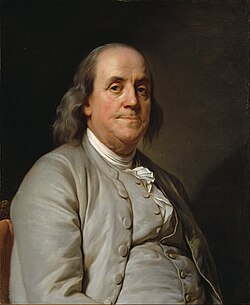
Well done is better than well said.

I have arrived. I am home. In the here, in the now. I am solid. I am free. In the ultimate I dwell.
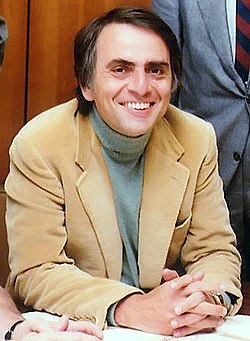
The truth may be puzzling. It may take some work to grapple with. It may be counterintuitive. It may contradict deeply held prejudices. It may not be consonant with what we desperately want to be true. But our preferences do not determine what's true. We have a method, and that method helps us to reach not absolute truth, only asymptotic approaches to the truth — never there, just closer and closer, always finding vast new oceans of undiscovered possibilities. Cleverly designed experiments are the key.
Of a surety, at the Day of Judgment it will be demanded of us, not what we have read, but what we have done; not how well we have spoken, but how holily we have lived.
The Tao that can be told is not the eternal Tao; The name that can be named is not the eternal name. The nameless is the beginning of heaven and earth. The named is the mother of ten thousand things. Ever desireless, one can see the mystery. Ever desiring, one can see the manifestations. These two spring from the same source but differ in name; this appears as darkness. Darkness within darkness. The gate to all mystery.

The discovery of a new dish does more for the happiness of mankind than the discovery of a new star.

It is only with the heart that one can see rightly; what is essential is invisible to the eye.

The surest way to arouse and hold the reader's attention is by being specific, definite, and concrete. The greatest writers — Homer, Dante, Shakespeare — are effective largely because they deal in particulars and report the details that matter. Their words call up pictures.

It isn't enough to talk about peace. One must believe in it. And it isn't enough to believe in it. One must work at it.
The tao that can be told is not the eternal Tao The name that can be named is not the eternal Name. The unnameable is the eternally real. Naming is the origin of all particular things. Free from desire, you realize the mystery. Caught in desire, you see only the manifestations. Yet mystery and manifestations arise from the same source. This source is called darkness. Darkness within darkness. The gateway to all understanding.
I went to the woods because I wished to live deliberately, to front only the essential facts of life, and see if I could not learn what it had to teach, and not, when I came to die, discover that I had not lived. I did not wish to live what was not life, living is so dear; nor did I wish to practise resignation, unless it was quite necessary. I wanted to live deep and suck out all the marrow of life, to live so sturdily and Spartan-like as to put to rout all that was not life, to cut a broad swath and shave close, to drive life into a corner, and reduce it to its lowest terms, and, if it proved to be mean, why then to get the whole and genuine meanness of it, and publish its meanness to the world; or if it were sublime, to know it by experience, and be able to give a true account of it in my next excursion. For most men, it appears to me, are in a strange uncertainty about it, whether it is of the devil or of God, and have somewhat hastily concluded that it is the chief end of man here to "glorify God and enjoy him forever."
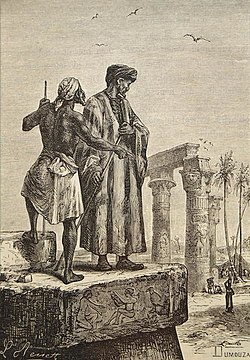
I set out alone, having neither fellow-traveller in whose companionship I might find cheer, nor caravan whose party I might join, but swayed by an overmastering impulse within me and a desire long-cherished in my bosom to visit these illustrious sanctuaries.