
Echoes

Leonardo da Vinci
1500
“Human subtlety...will never devise an invention more beautiful, more simple or more direct than does nature, because in her inventions nothing is lacking, and nothing is superfluous.”
❧

All Nature's wildness tells the same story: the shocks and outbursts of earthquakes, volcanoes, geysers, roaring, thundering waves and floods, the silent uprush of sap in plants, storms of every sort, each and all, are the orderly, beauty-making love-beats of Nature's heart.

Clouds are not spheres, mountains are not cones, coastlines are not circles, and bark is not smooth, nor does lightning travel in a straight line.
One is constantly reminded of the infinite lavishness and fertility of Nature — inexhaustible abundance amid what seems enormous waste. And yet when we look into any of her operations that lie within reach of our minds, we learn that no particle of her material is wasted or worn out. It is eternally flowing from use to use, beauty to yet higher beauty; and we soon cease to lament waste and death, and rather rejoice and exult in the imperishable, unspeakable wealth of the universe, and faithfully watch and wait the reappearance of everything that melts and fades and dies about us, feeling sure that its next appearance will be better and more beautiful than the last.

I wiped away the weeds and foam, And fetched my sea-born treasures home; But the poor, unsightly, noisome things Had left their beauty on the shore With the sun, and the sand, and the wild uproar.

Nature of the world was not created for us by divine will: such great fault is inherent in it.
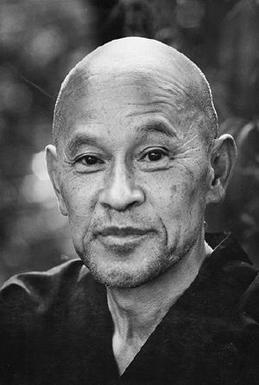
Nothing we see or hear is perfect. But right there in the imperfection is perfect reality.

The aesthetic quality of a product is an integral aspect of its usefulness. But a thing can only be beautiful if it is also well made.

People usually consider walking on water or in thin air a miracle. But I think the real miracle is not to walk either on water or in thin air, but to walk on earth. Every day we are engaged in a miracle which we don't even recognize: a blue sky, white clouds, green leaves, the black, curious eyes of a child—our own two eyes. All is a miracle.
Good design is unobtrusive. Products fulfilling a purpose are like tools. They are neither decorative objects nor works of art. Their design should therefore be both neutral and restrained, to leave room for the user's self-expression.
The sun shines not on us but in us. The rivers flow not past, but through us, thrilling, tingling, vibrating every fiber and cell of the substance of our bodies, making them glide and sing. The trees wave and the flowers bloom in our bodies as well as our souls, and every bird song, wind song, and tremendous storm song of the rocks in the heart of the mountains is our song, our very own, and sings our love.
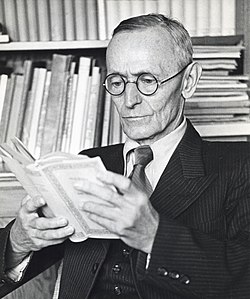
Trees are sanctuaries. Whoever knows how to speak to them, whoever knows how to listen to them, can learn the truth. They do not preach learning and precepts, they preach, undeterred by particulars, the ancient law of life.
Good design is as little design as possible. Less, but better — because it concentrates on the essential aspects, and the products are not burdened with non-essentials. Back to purity, back to simplicity.

The earth teaches us more about ourselves than all the books in the world, because it is resistant to us.
Everything is flowing — going somewhere, animals and so-called lifeless rocks as well as water. Thus the snow flows fast or slow in grand beauty-making glaciers and avalanches; the air in majestic floods carrying minerals, plant leaves, seeds, spores, with streams of music and fragrance; water streams carrying rocks … . While the stars go streaming through space pulsed on and on forever like blood globules in Nature's warm heart.

Knowing that certain nights whose sweetness lingers will keep returning to the earth and sea after we are gone, yes, this helps us to die.
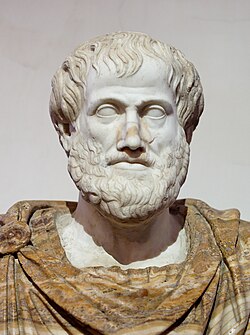
Nature does not do anything in vain.

After you have exhausted what there is in business, politics, conviviality, and so on — have found that none of these finally satisfy, or permanently wear — what remains? Nature remains.
As designers, we have a great responsibility. I believe designers should eliminate the unnecessary. That means eliminating everything that is modish because this kind of thing is only short-lived.

Come forth into the light of things, let Nature be your teacher.
Earth hath no sorrows that earth cannot heal, or heaven cannot heal, for the earth as seen in the clean wilds of the mountains is about as divine as anything the heart of man can conceive!
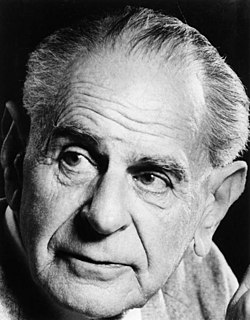
Bold ideas, unjustified anticipations, and speculative thought, are our only means for interpreting nature: our only organon, our only instrument, for grasping her.
Give me the splendid silent sun with all his beams full-dazzling, give me juicy autumnal fruit ripe and red from the orchard, give me a field where the unmowed grass grows, give me an arbor, give me the trellis'd grape.
It is the failing of a certain literature to believe that life is tragic because it is wretched. Life can be magnificent and overwhelming — that is its whole tragedy. Without beauty, love, or danger it would be almost easy to live. And M. Sartre's hero does not perhaps give us the real meaning of his anguish when he insists on those aspects of man he finds repugnant, instead of basing his reasons for despair on certain of man's signs of greatness. The realization that life is absurd cannot be an end, but only a beginning. This is a truth nearly all great minds have taken as their starting point. It is not this discovery that is interesting, but the consequences and rules of action drawn from it.

Mankind are so much the same, in all times and places, that history informs us of nothing new or strange in this particular. Its chief use is only to discover the constant and universal principles of human nature.