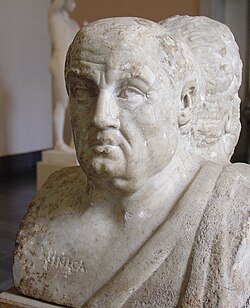
Moral excellence is an ornament for personal beauty; righteous conduct, for high birth; success, for learning; and proper spending, for wealth.
“That is not riches, which may be lost; virtue is our true good and the true reward of its possessor. That cannot be lost; that never deserts us, but when life leaves us. As to property and external riches, hold them with trembling; they often leave their possessor in contempt, and mocked at for having lost them.”
Moral excellence is an ornament for personal beauty; righteous conduct, for high birth; success, for learning; and proper spending, for wealth.
Faith is the best wealth for a man in this world. Righteousness when well practised brings happiness. Truth is the sweetest of flavours. They say the life of one living by wisdom is the best.
Wealth and honor are what every man desires. But if they have been obtained in violation of moral principles, they must not be kept.
Virtue is the root; wealth is the result.
He is richest who is content with the least, for contentment is the wealth of nature.
The wealth required by nature is limited and is easy to procure; but the wealth required by vain ideals extends to infinity. (15)
The fashion of this world passeth away and I would fain occupy myself with the things that are abiding.
I am grateful for what I am & have. My thanksgiving is perpetual. It is surprising how contented one can be with nothing definite — only a sense of existence. Well, anything for variety. I am ready to try this for the next 1000 years, & exhaust it. How sweet to think of! My extremities well charred, and my intellectual part too, so that there is no danger of worm or rot for a long while. My breath is sweet to me. O how I laugh when I think of my vague indefinite riches. No run on my bank can drain it — for my wealth is not possession but enjoyment.
If you wish to make Pythocles wealthy, don't give him more money; rather, reduce his desires.
Wealth consists not in having great possessions, but in having few wants.
True glory takes root and spreads; all pretenses quickly fall like flowers, and nothing feigned can last.
Never esteem anything as of advantage to you that will make you break your word or lose your self-respect.
With coarse rice to eat, with water to drink, and my bended arm for a pillow — I have still joy in the midst of these things. Riches and honors acquired by unrighteousness are to me as a floating cloud.
In ease of body and peace of mind, all the different ranks of life are nearly upon a level, and the beggar, who suns himself by the side of the highway, possesses that security which kings are fighting for.
Yet living and dying, honour and dishonour, pain and pleasure, riches and poverty, and so forth are equally the lot of good men and bad. Things like these neither elevate nor degrade; and therefore they are no more good than they are evil.
Our bodies are perishable, wealth is not at all permanent and death is always nearby. Therefore we must immediately engage in acts of merit.
At the bottom of the fall we were able to stand again on dry land. The rope could not be recovered. We had flung down the adze from the top of the fall and also the logbook and the cooker wrapped in one of our blouses. That was all, except our wet clothes, that we brought out of the Antarctic, which we had entered a year and a half before with well-found ship, full equipment, and high hopes. That was all of tangible things; but in memories we were rich. We had pierced the veneer of outside things. We had "suffered, starved and triumphed, groveled down yet grasped at glory, grown bigger in the bigness of the whole. We had seen God in His splendours, heard the text that Nature renders." We had reached the naked soul of man.
Beware lest you lose the substance by grasping at the shadow.
We make a living by what we get, but we make a life by what we give.
He who loses his money is forsaken by his friends, his wife, his servants, and his relations; yet when he regains his riches those who have forsaken him come back to him. Hence wealth is certainly the best of relations.
Blessedness is not the reward of virtue, but virtue itself; neither do we rejoice therein, because we control our lusts, but, contrariwise, because we rejoice therein, we are able to control our lusts.
Of a surety, at the Day of Judgment it will be demanded of us, not what we have read, but what we have done; not how well we have spoken, but how holily we have lived.
You will hear every day the maxims of a low prudence. You will hear, that the first duty is to get land and money, place and name. "What is this Truth you seek? What is this Beauty?" men will ask, with derision. If, nevertheless, God have called any of you to explore truth and beauty, be bold, be firm, be true. When you shall say, "As others do, so will I. I renounce, I am sorry for it, my early visions; I must eat the good of the land, and let learning and romantic expectations go, until a more convenient season." — then dies the man in you; then once more perish the buds of art, and poetry, and science, as they have died already in a thousand thousand men. The hour of that choice is the crisis of your history; and see that you hold yourself fast by the intellect. ... Bend to the persuasion which is flowing to you from every object in Nature, to be its tongue to the heart of man, and to show the besotted world how passing fair is wisdom.
It is not the man who has too little who is poor, but the one who hankers after more.
Independence I have long considered as the grand blessing of life, the basis of every virtue; and independence I will ever secure by contracting my wants, though I were to live on a barren heath.