
Echoes

Confucius
500 BC
“When one cultivates to the utmost the principles of his nature, and exercises them on the principle of reciprocity, he is not far from the path. What you do not like when done to yourself, do not do to others.”
❧

If you want to be respected by others the great thing is to respect yourself. Only by that, only by self-respect will you compel others to respect you.

Let us speak courteously, deal fairly, and keep ourselves armed and ready.

To account nothing of one’s self, and to think always kindly and highly of others, this is great and perfect wisdom.

Be kind, for everyone you meet is fighting a hard battle.

How selfish soever man may be supposed, there are evidently some principles in his nature, which interest him in the fortune of others, and render their happiness necessary to him, though he derives nothing from it except the pleasure of seeing it.
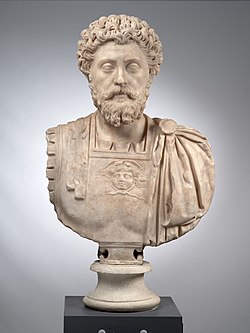
From my mother, piety and beneficence, and abstinence, not only from evil deeds, but even from evil thoughts; and further, simplicity in my way of living, far removed from the habits of the rich.

Just practice good, do good for others, without thinking of making yourself known so that you may gain reward. Really bring benefit to others, gaining nothing for yourself. This is the primary requisite for breaking free of attachments to the Self.

I have had three personal ideals: One to do the day's work well and not to bother about tomorrow. You may say that is not a satisfactory ideal. It is; and there is not one which the student can carry with him into practice with greater effect. To it more than anything else I owe whatever success I have had — to this power of settling down to the day's work and trying to do it well to the best of my ability, and letting the future take care of itself. The second ideal has been to act the Golden Rule, as far as in me lay, toward my professional brethren and toward the patients committed to my care. And the third has been to cultivate such a measure of equanimity as would enable me to bear success with humility, the affection of my friends without pride, and to be ready when the day of sorrow and grief came, to meet it with the courage befitting a man. What the future has in store for me, I cannot tell — you cannot tell. Nor do I care much, so long as I carry with me, as I shall, the memory of the past you have given me. Nothing can take that away.
When the happiness or misery of others depends in any respect upon our conduct, we dare not, as self–love might suggest to us, prefer the interest of one to that of many. The man within immediately calls to us, that we value ourselves too much and other people too little, and that, by doing so, we render ourselves the proper object of the contempt and indignation of our brethren. Neither is this sentiment confined to men of extraordinary magnanimity and virtue. It is deeply impressed upon every tolerably good soldier, who feels that he would become the scorn of his companions, if he could be supposed capable of shrinking from danger, or of hesitating, either to expose or to throw away his life, when the good of the service required it.

The inhabitants of these islands are the most hospitable people I have ever encountered; they give freely of what they possess, asking nothing in return.

If you act externally with men in conformity with your rank, you should recognize, by a more secret but truer thought, that you have nothing naturally superior to them.

Only if we understand can we care. Only if we care will we help. Only if we help shall they be saved.

Go forth in virtue!

The only real, dignified, human doctrine is the greatest good of all, and this can only be achieved by uttermost self-sacrifice.
Every man is, no doubt, by nature, first and principally recommended to his own care; and as he is fitter to take care of himself than of any other person, it is fit and right that it should be so.
Brothers, have no fear of men's sin. Love a man even in his sin, for that is the semblance of Divine Love and is the highest love on earth. Love all God's creation, the whole of it and every grain of sand in it. Love every leaf, every ray of God's light. Love the animals, love the plants, love everything. If you love everything, you will perceive the divine mystery in things. Once you have perceived it, you will begin to comprehend it better every day, and you will come at last to love the world with an all-embracing love. Love the animals: God has given them the rudiments of thought and untroubled joy. So do not trouble it, do not harass them, do not deprive them of their joy, do not go against God's intent. Man, do not exhale yourself above the animals: they are without sin, while you in your majesty defile the earth by your appearance on it, and you leave the traces of your defilement behind you — alas, this is true of almost every one of us! Love children especially, for like the angels they too are sinless, and they live to soften and purify our hearts, and, as it were, to guide us. Woe to him who offends a child. My young brother asked even the birds to forgive him. It may sound absurd, but it is right none the less, for everything, like the ocean, flows and enters into contact with everything else: touch one place, and you set up a movement at the other end of the world. It may be senseless to beg forgiveness of the birds, but, then, it would be easier for the birds, and for the child, and for every animal if you were yourself more pleasant than you are now. Everything is like an ocean, I tell you. Then you would pray to the birds, too, consumed by a universal love, as though in ecstasy, and ask that they, too, should forgive your sin. Treasure this ecstasy, however absurd people may think it.

It is not fair to ask of others what you are unwilling to do yourself.
If the public thought elevates you above the generality of men, let the other humble you, and hold you in a perfect equality with all mankind, for this is your natural condition.

Attach yourself to what is spiritually superior, regardless of what other people think or do. Hold to your true aspirations no matter what is going on around you.

If in our daily life we can smile, if we can be peaceful and happy, not only we, but everyone will profit from it. If we really know how to live, what better way to start the day than with a smile? Our smile affirms our awareness and determination to live in peace and joy. The source of a true smile is an awakened mind.
Sincerity is the end and beginning of things; without sincerity there would be nothing. On this account, the superior man regards the attainment of sincerity as the most excellent thing.

The most any one can do is to confess as candidly as he can the grounds for the faith that is in him, and leave his example to work on others as it may.
I have never felt that anything really mattered but the satisfaction of knowing that you stood for the things in which you believed and had done the very best you could.
Wealth and honor are what every man desires. But if they have been obtained in violation of moral principles, they must not be kept.