
Echoes

Nikola Tesla
1900
“Our virtues and our failings are inseparable, like force and matter. When they separate, man is no more.”
❧
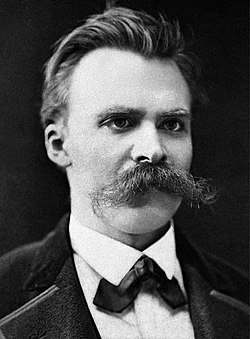
The body is a great reason, a plurality with one sense, a war and a peace, a flock and a shepherd.

The sun shines not on us but in us. The rivers flow not past, but through us, thrilling, tingling, vibrating every fiber and cell of the substance of our bodies, making them glide and sing. The trees wave and the flowers bloom in our bodies as well as our souls, and every bird song, wind song, and tremendous storm song of the rocks in the heart of the mountains is our song, our very own, and sings our love.

I am not this hair, I am not this skin, I am the soul that lives within.

How selfish soever man may be supposed, there are evidently some principles in his nature, which interest him in the fortune of others, and render their happiness necessary to him, though he derives nothing from it except the pleasure of seeing it.
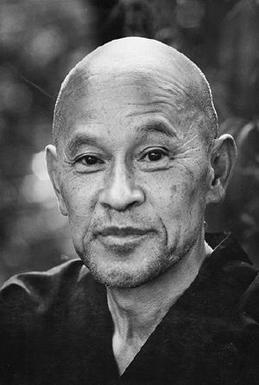
Nothing we see or hear is perfect. But right there in the imperfection is perfect reality.
To study the meaning of man and of life — I am making significant progress here. I have faith in myself. Man is a mystery: if you spend your entire life trying to puzzle it out, then do not say that you have wasted your time. I occupy myself with this mystery, because I want to be a man.

Out of my experience, such as it is (and it is limited enough) one fixed conclusion dogmatically emerges, and that is this, that we with our lives are like islands in the sea, or like trees in the forest. The maple and the pine may whisper to each other with their leaves. ... But the trees also commingle their roots in the darkness underground, and the islands also hang together through the ocean's bottom. Just so there is a continuum of cosmic consciousness, against which our individuality builds but accidental fences, and into which our several minds plunge as into a mother-sea or reservoir.

I must also have a dark side if I am to be whole.

Not in utter nakedness, but trailing clouds of glory do we come from God, who is our home.
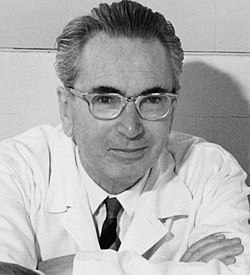
The way in which a man accepts his fate and all the suffering it entails, the way in which he takes up his cross, gives him ample opportunity — even under the most difficult circumstances — to add a deeper meaning to his life. It may remain brave, dignified and unselfish. Or in the bitter fight for self-preservation he may forget his human dignity and become no more than an animal. Here lies the chance for a man either to make use of or to forgo the opportunities of attaining the moral values that a difficult situation may afford him. And this decides whether he is worthy of his sufferings or not.

It appears to me impossible that I should cease to exist, or that this active, restless spirit, equally alive to joy and sorrow, should only be organised dust — ready to fly abroad the moment the spring snaps, or the spark goes out which kept it together. Surely something resides in this heart that is not perishable, and life is more than a dream.

He who remembers the evils he has undergone, and those that have threatened him, and the slight causes that have changed him from one state to another, prepares himself in that way for future changes and for recognizing his condition. The life of Caesar has no more to show us than our own; an emperor's or an ordinary man's, it is still a life subject to all human accidents.

It is in your act that you exist, not in your body. Your act is yourself, and there is no other you.
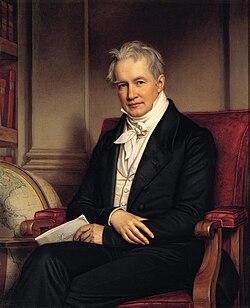
Nature everywhere speaks to man in a voice familiar to his soul.

All is not frustrated, though thou find thyself very often afflicted or grievously tempted. Thou art man, not God; thou art flesh, not an angel.

For one man cannot do right in one department of life whilst he is occupied in doing wrong in any other department. Life is one indivisible whole.

Men are at variance with the one thing with which they are in the most unbroken communion, the reason that administers the whole universe.
Pain and suffering are always inevitable for a large intelligence and a deep heart. The really great men must, I think, have great sadness on Earth.

It is just as foolish to complain that people are selfish and treacherous as it is to complain that the magnetic field does not increase unless the electric field has a curl. Both are laws of nature.

It is the failing of a certain literature to believe that life is tragic because it is wretched. Life can be magnificent and overwhelming — that is its whole tragedy. Without beauty, love, or danger it would be almost easy to live. And M. Sartre's hero does not perhaps give us the real meaning of his anguish when he insists on those aspects of man he finds repugnant, instead of basing his reasons for despair on certain of man's signs of greatness. The realization that life is absurd cannot be an end, but only a beginning. This is a truth nearly all great minds have taken as their starting point. It is not this discovery that is interesting, but the consequences and rules of action drawn from it.
If there is a meaning in life at all, then there must be a meaning in suffering. Suffering is an ineradicable part of life, even as fate and death.

The same stream of life that runs through my veins night and day runs through the world and dances in rhythmic measures. It is the same life that shoots in joy through the dust of the earth in numberless blades of grass and breaks into tumultuous waves of leaves and flowers.
You must not lose faith in humanity. Humanity is an ocean; if a few drops of the ocean are dirty, the ocean does not become dirty.
I have endowed everyone with a temperament of his own, given everyone an idiom of his own; so that what is praise for him is blame for thee, what is honey for him is poison for thee, what is light for him is fire for thee, what is rose for him is thorn for thee, what is good for him is evil for thee, what is beautiful for him is ugly for thee. In the people of Hindustan the idiom of Hindustan is praiseworthy; in the people of Sind, the idiom of Sind is praiseworthy. I do not see the outward and the speech; I see the inward and the state [of feeling]. For the heart is the substance and speech an accident. So, the accident is subservient, the substance is the [real] object. The religion of love stands apart from all religions. For lovers the [only] religion and creed is God.