
The problem of our age is the proper administration of wealth, so that the ties of brotherhood may still bind together the rich and poor in harmonious relationship.
“Such, in my opinion, is the true Gospel concerning Wealth, obedience to which is destined some day to solve the problem of the Rich and the Poor, and to bring "Peace on earth, among men Good Will."”
The problem of our age is the proper administration of wealth, so that the ties of brotherhood may still bind together the rich and poor in harmonious relationship.
Thus is the problem of Rich and Poor to be solved. The laws of accumulation will be left free; the laws of distribution free. Individualism will continue, but the millionaire will be but a trustee of the poor; intrusted for a season with a great part of the increased wealth of the community, but administering it for the community far better than it could or would have done for itself. (pp. 663-664)

We of the great modern democracies must strive unceasingly to make our several countries lands in which a poor man who works hard can live comfortably and honestly, and in which a rich man cannot live dishonestly nor in slothful avoidance of duty; and yet we must judge rich man and poor man alike by a standard which rests on conduct and not on caste, and we must frown with the same stern severity on the mean and vicious envy which hates and would plunder a man because he is well off and on the brutal and selfish arrogance which looks down on and exploits the man with whom life has gone hard.

I know of no country, indeed, where the love of money has taken stronger hold on the affections of men, and where the profounder contempt is expressed for the theory of the permanent equality of property.
I believe that material wealth is an exceedingly valuable servant, and a particularly abhorrent master, in our National life. I think one end of government should be to achieve prosperity; but it should follow this end chiefly to serve an even higher and more important end - that of promoting the character and welfare of the average man. In the long run, and inevitably, the actual control of the government will be determined by the chief end which the government subserves. If the end and aim of government action is merely to accumulate general material prosperity, treating such prosperity as an end in itself and not as a means, then it is inevitable that material wealth and the masters of that wealth will dominate and control the course of national action. If, on the other hand, the achievement of material wealth is treated, not as an end of government, but as a thing of great value, it is true—so valuable as to be indispensable—but of value only in connection with the achievement of other ends, then we are free to seek through our government, and through the supervision of our individual activities, the realization of a true democracy. Then we are free to seek not only the heaping up of material wealth, but a wise and generous distribution of such wealth so as to diminish grinding poverty, and, so far as may be, to equalize social and economic no less than political opportunity.
The man who dies thus rich dies disgraced.
The man who dies rich dies disgraced.

This disposition to admire, and almost to worship, the rich and powerful, and to despise or, at least, neglect persons of poor and mean conditions, though necessary both to establish and to maintain the distinction of ranks and the order of society, is, at the same time, the great and most universal cause of the corruption of our moral sentiments.
No society can surely be flourishing and happy, of which the greater part of the members are poor and miserable. It is but equity, besides, that they who feed, cloath and lodge the whole body of the people, should have such a share of the produce of their own labour as to be themselves tolerably well fed, clothed, and lodged.
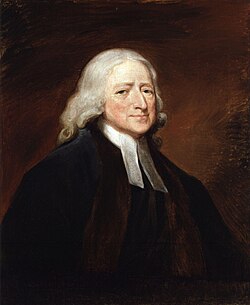
Gain all you can, save all you can, give all you can.
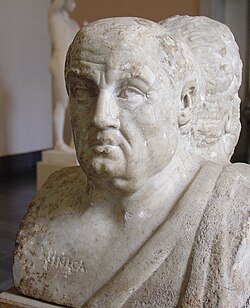
Let us become intimate with poverty, so that Fortune may not catch us off our guard. We shall be rich with all the more comfort, if we once learn how far poverty is from being a burden.

If you wish to make Pythocles wealthy, don't give him more money; rather, reduce his desires.

That is not riches, which may be lost; virtue is our true good and the true reward of its possessor. That cannot be lost; that never deserts us, but when life leaves us. As to property and external riches, hold them with trembling; they often leave their possessor in contempt, and mocked at for having lost them.

He who loses his money is forsaken by his friends, his wife, his servants, and his relations; yet when he regains his riches those who have forsaken him come back to him. Hence wealth is certainly the best of relations.

Virtue is the root; wealth is the result.

Faith is the best wealth for a man in this world. Righteousness when well practised brings happiness. Truth is the sweetest of flavours. They say the life of one living by wisdom is the best.

The rich in all societies may be thrown into two classes. The first is of those who are powerful as well as rich, and conduct the operations of the vast political machine. The other is of those who employ their riches wholly in the acquisition of pleasure. As to the first sort, their continual care and anxiety, their toilsome days and sleepless nights, are next to proverbial. These circumstances are sufficient almost to level their condition to that of the unhappy majority; but there are other circumstances which place them in a far lower condition. Not only their understandings labour continually, which is the severest labour, but their hearts are torn by the worst, most troublesome, and insatiable of all passions, by avarice, by ambition, by fear and jealousy. No part of the mind has rest. Power gradually extirpates from the mind every humane and gentle virtue. Pity, benevolence, friendship, are things almost unknown in high stations.
Wealth and honor are what every man desires. But if they have been obtained in violation of moral principles, they must not be kept.

Resolve not to be poor: whatever you have, spend less. Poverty is a great enemy to human happiness; it certainly destroys liberty, and it makes some virtues impracticable, and others extremely difficult.
Resolve not to be poor: whatever you have, spend less. Poverty is a great enemy to human happiness; it certainly destroys liberty, and it makes some virtues impracticable, and others extremely difficult.
Be ever active in the management of the economy, because the root of wealth is economic activity; inactivity brings material distress.
No country can long endure if its foundations are not laid deep in the material prosperity which comes from thrift, from business energy and enterprise, from hard, unsparing effort in the fields of industrial activity; but neither was any nation ever yet truly great if it relied upon material prosperity alone. All honor must be paid to the architects of our material prosperity, to the great captains of industry who have built our factories and our railroads, to the strong men who toil for wealth with brain or hand; for great is the debt of the nation to these and their kind. But our debt is yet greater to the men whose highest type is to be found in a statesman like Lincoln, a soldier like Grant. They showed by their lives that they recognized the law of work, the law of strife; they toiled to win a competence for themselves and those dependent upon them; but they recognized that there were yet other and even loftier duties—duties to the nation and duties to the race. We cannot sit huddled within our own borders and avow ourselves merely an assemblage of well-to-do hucksters who care nothing for what happens beyond. Such a policy would defeat even its own end; for as the nations grow to have ever wider and wider interests, and are brought into closer and closer contact, if we are to hold our own in the struggle for naval and commercial supremacy, we must build up our power without our own borders. We must build the Isthmian Canal, and we must grasp the points of vantage which will enable us to have our say in deciding the destiny of the oceans of the East and the West.

The moral flabbiness born of the exclusive worship of the bitch-goddess SUCCESS. That — with the squalid cash interpretation put on the word success — is our national disease.
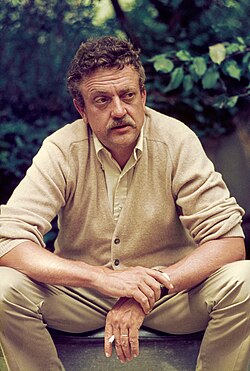
True story, Word of Honor: Joseph Heller, an important and funny writer now dead, and I were at a party given by a billionaire on Shelter Island. I said, 'Joe, how does it make you feel to know that our host only yesterday may have made more money than your novel Catch-22 has earned in its entire history?' And Joe said, 'I've got something he can never have.' And I said, 'What on earth could that be, Joe?' And Joe said, 'The knowledge that I've got enough.' Not bad!

Wise men don't need to prove their point; men who need to prove their point aren't wise. The Master has no possessions. The more he does for others, the happier he is. The more he gives to others, the wealthier he is. The Tao nourishes by not forcing. By not dominating, the Master leads.