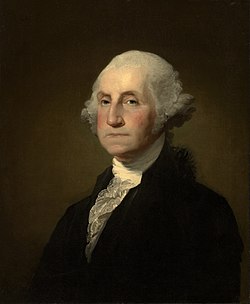
 George Washington·1796
It is substantially true, that virtue or morality is a necessary spring of popular government. The rule, indeed, extends with more or less force to every species of free government.
 John Adams·1776
Statesmen, my dear Sir, may plan and speculate for Liberty, but it is Religion and Morality alone, which can establish the Principles upon which Freedom can securely stand. The only foundation of a free Constitution is pure Virtue, and if this cannot be inspired into our People in a greater Measure than they have it now, They may change their Rulers and the forms of Government, but they will not obtain a lasting Liberty. They will only exchange Tyrants and Tyrannies.
 Edmund Burke·1796
Manners are of more importance than laws. The law can touch us here and there, now and then. Manners are what vex or soothe, corrupt or purify, exalt or debase, barbarize or refine us, by a constant, steady, uniform, insensible operation like that of the air we breathe in.
Born under another sky, placed in the middle of an always-moving scene, himself driven by the irresistible torrent which sweeps along everything that surrounds him, the American has no time to tie himself to anything; he grows accustomed to naught but change, and concludes by viewing it as the natural state of man; he feels a need for it; even more, he loves it: for instability, instead of occurring to him in the form of disasters, seems to give birth to nothing around him but wonders...
I know of no country, indeed, where the love of money has taken stronger hold on the affections of men, and where the profounder contempt is expressed for the theory of the permanent equality of property.
There is in fact a manly and legitimate passion for equality that spurs all men to wish to be strong and esteemed. This passion tends to elevate the lesser to the rank of the greater. But one also finds in the human heart a depraved taste for equality, which impels the weak to want to bring the strong down to their level, and which reduces men to preferring equality in servitude to inequality in freedom.