
The wealth required by nature is limited and is easy to procure; but the wealth required by vain ideals extends to infinity. (15)

“Americans cleave to the things of this world as if assured that they will never die,… They clutch everything but hold nothing fast, and so lose grip as they hurry after some new delight. ... Death steps in in the end and stops him before he has grown tired of this futile pursuit of that complete felicity which always escapes him. At first sight there is something astonishing in this spectacle of so many lucky men restless in the midst of abundance. But it is a spectacle as old as the world; all that is new is to see a whole people performing in it.”
The wealth required by nature is limited and is easy to procure; but the wealth required by vain ideals extends to infinity. (15)

Our bodies are perishable, wealth is not at all permanent and death is always nearby. Therefore we must immediately engage in acts of merit.

The great source of both the misery and disorders of human life, seems to arise from over-rating the difference between one permanent situation and another. Avarice over-rates the difference between poverty and riches: ambition, that between a private and a public station: vain-glory, that between obscurity and extensive reputation. The person under the influence of any of those extravagant passions, is not only miserable in his actual situation, but is often disposed to disturb the peace of society, in order to arrive at that which he so foolishly admires. The slightest observation, however, might satisfy him, that, in all the ordinary situations of human life, a well-disposed mind may be equally calm, equally cheerful, and equally contented. Some of those situations may, no doubt, deserve to be preferred to others: but none of them can deserve to be pursued with that passionate ardour which drives us to violate the rules either of prudence or of justice; or to corrupt the future tranquillity of our minds, either by shame from the remembrance of our own folly, or by remorse from the horror of our own injustice.

Poverty is a bitter thing; but it is not as bitter as the existence of restless vacuity and physical, moral, and intellectual flabbiness, to which those doom themselves who elect to spend all their years in that vainest of all vain pursuits—the pursuit of mere pleasure as a sufficient end in itself.
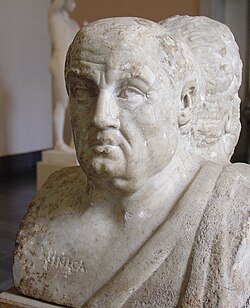
Nothing, Lucilius, is ours, except time. We were entrusted by nature with the ownership of this single thing, so fleeting and slippery that anyone who will can oust us from possession.

You will hear every day the maxims of a low prudence. You will hear, that the first duty is to get land and money, place and name. "What is this Truth you seek? What is this Beauty?" men will ask, with derision. If, nevertheless, God have called any of you to explore truth and beauty, be bold, be firm, be true. When you shall say, "As others do, so will I. I renounce, I am sorry for it, my early visions; I must eat the good of the land, and let learning and romantic expectations go, until a more convenient season." — then dies the man in you; then once more perish the buds of art, and poetry, and science, as they have died already in a thousand thousand men. The hour of that choice is the crisis of your history; and see that you hold yourself fast by the intellect. ... Bend to the persuasion which is flowing to you from every object in Nature, to be its tongue to the heart of man, and to show the besotted world how passing fair is wisdom.

I am grateful for what I am & have. My thanksgiving is perpetual. It is surprising how contented one can be with nothing definite — only a sense of existence. Well, anything for variety. I am ready to try this for the next 1000 years, & exhaust it. How sweet to think of! My extremities well charred, and my intellectual part too, so that there is no danger of worm or rot for a long while. My breath is sweet to me. O how I laugh when I think of my vague indefinite riches. No run on my bank can drain it — for my wealth is not possession but enjoyment.
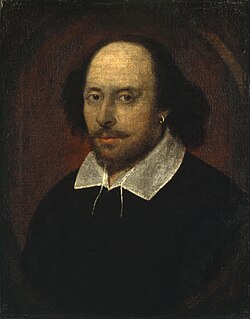
We are such stuff As dreams are made on; and our little life Is rounded with a sleep.

After you have exhausted what there is in business, politics, conviviality, and so on — have found that none of these finally satisfy, or permanently wear — what remains? Nature remains.
Tomorrow, and tomorrow, and tomorrow,Creeps in this petty pace from day to day,To the last syllable of recorded time;And all our yesterdays have lighted foolsThe way to dusty death. Out, out, brief candle!Life's but a walking shadow, a poor playerThat struts and frets his hour upon the stage,And then is heard no more. It is a taleTold by an idiot, full of sound and fury,Signifying nothing.

The fashion of this world passeth away and I would fain occupy myself with the things that are abiding.
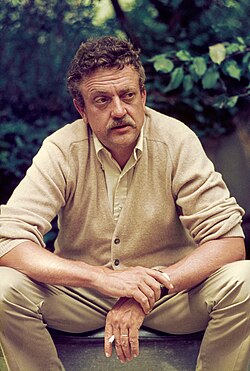
True story, Word of Honor: Joseph Heller, an important and funny writer now dead, and I were at a party given by a billionaire on Shelter Island. I said, 'Joe, how does it make you feel to know that our host only yesterday may have made more money than your novel Catch-22 has earned in its entire history?' And Joe said, 'I've got something he can never have.' And I said, 'What on earth could that be, Joe?' And Joe said, 'The knowledge that I've got enough.' Not bad!

With coarse rice to eat, with water to drink, and my bended arm for a pillow — I have still joy in the midst of these things. Riches and honors acquired by unrighteousness are to me as a floating cloud.
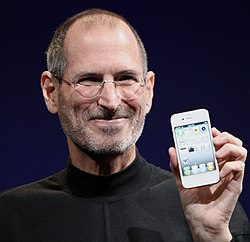
Remembering that I'll be dead soon is the most important tool I've ever encountered to help me make the big choices in life. Because almost everything — all external expectations, all pride, all fear of embarrassment or failure — these things just fall away in the face of death, leaving only what is truly important. Remembering that you are going to die is the best way I know to avoid the trap of thinking you have something to lose. You are already naked. There is no reason not to follow your heart.

Do not, my soul, seek immortal life, but exhaust the limits of the possible.
Most men ebb and flow in wretchedness between the fear of death and the hardships of life; they are unwilling to live, and yet they do not know how to die.

If there is a sin against life, it consists perhaps not so much in despairing of life as in hoping for another life and in eluding the implacable grandeur of this life.
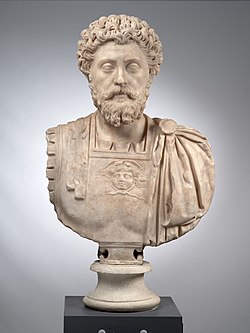
Remember that man lives only in the present, in this fleeting instant; all the rest of his life is either past and gone, or not yet revealed. Short, therefore, is man's life, and narrow is the corner of the earth wherein he dwells.
Do not act as if thou wert going to live ten thousand years. Death hangs over thee. While thou livest, while it is in thy power, be good.

That is not riches, which may be lost; virtue is our true good and the true reward of its possessor. That cannot be lost; that never deserts us, but when life leaves us. As to property and external riches, hold them with trembling; they often leave their possessor in contempt, and mocked at for having lost them.

The moral flabbiness born of the exclusive worship of the bitch-goddess SUCCESS. That — with the squalid cash interpretation put on the word success — is our national disease.

The love of money as a possession — as distinguished from the love of money as a means to the enjoyments and realities of life — will be recognised for what it is, a somewhat disgusting morbidity, one of those semi-criminal, semi-pathological propensities which one hands over with a shudder to the specialists in mental disease.
People are frugal in guarding their personal property; but as soon as it comes to squandering time they are most wasteful of the one thing in which it is right to be stingy.
Life is too short to waste The critic bite or cynic bark, Quarrel, or reprimand; ’Twill soon be dark; Up! mind thine own aim, and God speed the mark!
Take the happiest man, the one most envied by the world, and in nine cases out of ten his inmost consciousness is one of failure. Either his ideals in the line of his achievements are pitched far higher than the achievements themselves, or else he has secret ideals of which the world knows nothing, and in regard to which he inwardly knows himself to be found wanting.