Born under another sky, placed in the middle of an always-moving scene, himself driven by the irresistible torrent which sweeps along everything that surrounds him, the American has no time to tie himself to anything; he grows accustomed to naught but change, and concludes by viewing it as the natural state of man; he feels a need for it; even more, he loves it: for instability, instead of occurring to him in the form of disasters, seems to give birth to nothing around him but wonders...
The best laws cannot make a constitution work in spite of morals; morals can turn the worst laws to advantage. That is a commonplace truth, but one to which my studies are always bringing me back. It is the central point in my conception. I see it at the end of all my reflections.
I know of no country, indeed, where the love of money has taken stronger hold on the affections of men, and where the profounder contempt is expressed for the theory of the permanent equality of property.
 John Adams·1765
Liberty must at all hazards be supported. We have a right to it, derived from our Maker. But if we had not, our fathers have earned and bought it for us, at the expense of their ease, their estates, their pleasure, and their blood.
 E.B. White·1941
Liberty is never out of bounds or off limits; it spreads wherever it can capture the imagination of men.
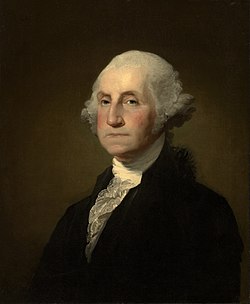 George Washington·1776
The time is now near at hand which must probably determine whether Americans are to be freemen or slaves; whether they are to have any property they can call their own; whether their houses and farms are to be pillaged and destroyed, and themselves consigned to a state of wretchedness from which no human efforts will deliver them. The fate of unborn millions will now depend, under God, on the courage and conduct of this army. Our cruel and unrelenting enemy leaves us only the choice of brave resistance, or the most abject submission. We have, therefore, to resolve to conquer or die.