
Echoes

Augustine of Hippo
398 AD
“The present of things past is memory; the present of things present is sight; and the present of things future is expectation.”
❧

Human nature being what it is, events which happened in the past will at some time or other and in much the same ways be repeated in the future.

Whoever wishes to foresee the future must consult the past; for human events ever resemble those of preceding times. This arises from the fact that they are produced by men who ever have been, and ever shall be, animated by the same passions, and thus they necessarily have the same results.

The present moment contains past and future. The secret of transformation, is in the way we handle this very moment.

To different minds, the same world is a hell, and a heaven.

You cannot stay on the summit forever; you have to come down again. So why bother in the first place? Just this: what is above knows what is below, but what is below does not know what is above. One climbs, one sees. One descends, one sees no longer, but one has seen. There is an art of conducting oneself in the lower regions by the memory of what one saw higher up. When one can no longer see, one can at least still know.
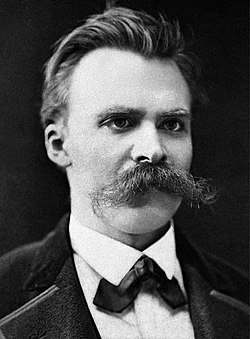
And those who were seen dancing were thought to be insane by those who could not hear the music.

Mankind are so much the same, in all times and places, that history informs us of nothing new or strange in this particular. Its chief use is only to discover the constant and universal principles of human nature.

It means being conscious and aware enough to choose what you pay attention to and to choose how you construct meaning from experience.
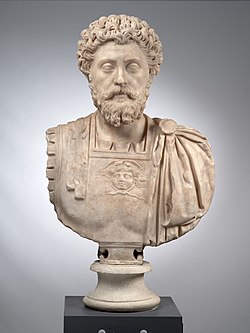
Remember that man lives only in the present, in this fleeting instant; all the rest of his life is either past and gone, or not yet revealed. Short, therefore, is man's life, and narrow is the corner of the earth wherein he dwells.

The only true voyage of discovery, the only fountain of Eternal Youth, would be not to visit strange lands but to possess other eyes, to behold the universe through the eyes of another, of a hundred others, to behold the hundred universes that each of them beholds, that each of them is.
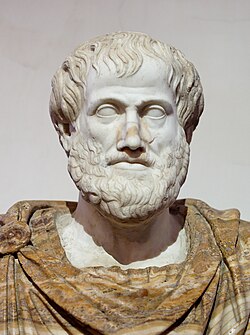
All men by nature desire to know. An indication of this is the delight we take in our senses; for even apart from their usefulness they are loved for themselves; and above all others the sense of sight. For not only with a view to action, but even when we are not going to do anything, we prefer sight to almost everything else. The reason is that this, most of all the senses, makes us know and brings to light many differences between things.
Against that positivism which stops before phenomena, saying "there are only facts," I should say: no, it is precisely facts that do not exist, only interpretations...

Nothing is permanent in all the world. All things are fluid; every image forms, wandering through change. Time itself flows on in constant motion, just like a river, for neither the river nor the swift hour can stop its course; but as wave impels wave, and as each wave comes, the one before is both impelled by the next and impels the one ahead, so time both flees and follows and is always new.
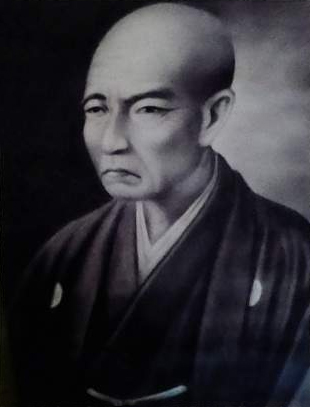
It is said that what is called the spirit of an age is something to which one cannot return. That this spirit gradually dissipates is due to the world's coming to an end. In the same way, a single year does not have just spring or summer. A single day, too, is the same.
Everything we hear is an opinion, not a fact. Everything we see is a perspective, not the truth.

It is not things that disturb us, but our judgments about things. For example, death is nothing terrible, for if it were, it would have appeared so to Socrates; but the judgment that death is terrible — that is the terrible thing.

Eventually, all things merge into one, and a river runs through it. The river was cut by the world's great flood and runs over rocks from the basement of time. On some of those rocks are timeless raindrops. Under the rocks are the words, and some of the words are theirs. I am haunted by waters.

We comfort ourselves by reliving memories of protection. Something closed must retain our memories, while leaving them their original value as images. Memories of the outside world will never have the same tonality as those of home and, by recalling these memories, we add to our store of dreams; we are never real historians, but always near poets.

Every faculty in one man is the measure by which he judges of the like faculty in another. I judge of your sight by my sight, of your ear by my ear, of your reason by my reason, of your resentment by my resentment, of your love by my love. I neither have, nor can have, any other way of judging about them.

Wanderer, your footprints are the road, and nothing more; wanderer, there is no road, the road is made by walking. By walking one makes the road, and on looking back one sees the path that never will be trod again. Wanderer, there is no road — only wakes upon the sea.

You've got to have models in your head. And you've got to array your experience — both vicarious and direct — on this latticework of models.

The Moving Finger writes; and, having writ, moves on: nor all thy Piety nor Wit shall lure it back to cancel half a Line, nor all thy Tears wash out a Word of it.

A rock pile ceases to be a rock pile the moment a single man contemplates it, bearing within him the image of a cathedral.

The scenes of life are like the pictures in a magic lantern: we see them, one after another, with vivid distinctness; but as soon as one vanishes, it is utterly forgotten; and then the next appears, completely different from what went before — though at bottom it is always the same story.