
The wealth required by nature is limited and is easy to procure; but the wealth required by vain ideals extends to infinity. (15)
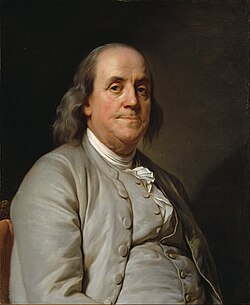
“Who dainties love shall beggars prove.”
The wealth required by nature is limited and is easy to procure; but the wealth required by vain ideals extends to infinity. (15)
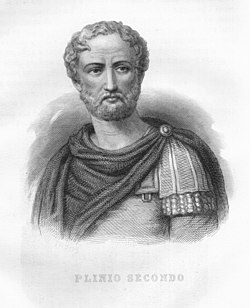
An object in possession seldom retains the same charm that it had in pursuit.

Beware lest you lose the substance by grasping at the shadow.

Poverty is a bitter thing; but it is not as bitter as the existence of restless vacuity and physical, moral, and intellectual flabbiness, to which those doom themselves who elect to spend all their years in that vainest of all vain pursuits—the pursuit of mere pleasure as a sufficient end in itself.

The great source of both the misery and disorders of human life, seems to arise from over-rating the difference between one permanent situation and another. Avarice over-rates the difference between poverty and riches: ambition, that between a private and a public station: vain-glory, that between obscurity and extensive reputation. The person under the influence of any of those extravagant passions, is not only miserable in his actual situation, but is often disposed to disturb the peace of society, in order to arrive at that which he so foolishly admires. The slightest observation, however, might satisfy him, that, in all the ordinary situations of human life, a well-disposed mind may be equally calm, equally cheerful, and equally contented. Some of those situations may, no doubt, deserve to be preferred to others: but none of them can deserve to be pursued with that passionate ardour which drives us to violate the rules either of prudence or of justice; or to corrupt the future tranquillity of our minds, either by shame from the remembrance of our own folly, or by remorse from the horror of our own injustice.

The rich in all societies may be thrown into two classes. The first is of those who are powerful as well as rich, and conduct the operations of the vast political machine. The other is of those who employ their riches wholly in the acquisition of pleasure. As to the first sort, their continual care and anxiety, their toilsome days and sleepless nights, are next to proverbial. These circumstances are sufficient almost to level their condition to that of the unhappy majority; but there are other circumstances which place them in a far lower condition. Not only their understandings labour continually, which is the severest labour, but their hearts are torn by the worst, most troublesome, and insatiable of all passions, by avarice, by ambition, by fear and jealousy. No part of the mind has rest. Power gradually extirpates from the mind every humane and gentle virtue. Pity, benevolence, friendship, are things almost unknown in high stations.

Americans cleave to the things of this world as if assured that they will never die,… They clutch everything but hold nothing fast, and so lose grip as they hurry after some new delight. ... Death steps in in the end and stops him before he has grown tired of this futile pursuit of that complete felicity which always escapes him. At first sight there is something astonishing in this spectacle of so many lucky men restless in the midst of abundance. But it is a spectacle as old as the world; all that is new is to see a whole people performing in it.

You will hear every day the maxims of a low prudence. You will hear, that the first duty is to get land and money, place and name. "What is this Truth you seek? What is this Beauty?" men will ask, with derision. If, nevertheless, God have called any of you to explore truth and beauty, be bold, be firm, be true. When you shall say, "As others do, so will I. I renounce, I am sorry for it, my early visions; I must eat the good of the land, and let learning and romantic expectations go, until a more convenient season." — then dies the man in you; then once more perish the buds of art, and poetry, and science, as they have died already in a thousand thousand men. The hour of that choice is the crisis of your history; and see that you hold yourself fast by the intellect. ... Bend to the persuasion which is flowing to you from every object in Nature, to be its tongue to the heart of man, and to show the besotted world how passing fair is wisdom.

O wretched, miserable life! O unhappy temperament! To think that I, a man of sense, should have allowed myself to be brought to such a state by sensuality! Not to mention the pains in my stomach, my sides, and other parts of my body.

It is the preoccupation with possessions, more than anything else, that prevents us from living freely and nobly.

If one advances confidently in the direction of his dreams, and endeavors to live the life which he has imagined, he will meet with a success unexpected in common hours ... In proportion as he simplifies his life, the laws of the universe will appear less complex, and solitude will not be solitude, nor poverty poverty, nor weakness weakness.
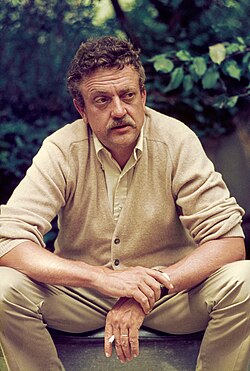
True story, Word of Honor: Joseph Heller, an important and funny writer now dead, and I were at a party given by a billionaire on Shelter Island. I said, 'Joe, how does it make you feel to know that our host only yesterday may have made more money than your novel Catch-22 has earned in its entire history?' And Joe said, 'I've got something he can never have.' And I said, 'What on earth could that be, Joe?' And Joe said, 'The knowledge that I've got enough.' Not bad!
You shall have joy, or you shall have power, said God; you shall not have both.

Independence I have long considered as the grand blessing of life, the basis of every virtue; and independence I will ever secure by contracting my wants, though I were to live on a barren heath.
If you wish to make Pythocles wealthy, don't give him more money; rather, reduce his desires.
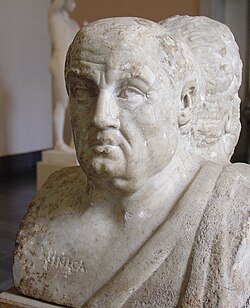
It is not the man who has too little who is poor, but the one who hankers after more.

Nature makes us poor only when we want necessaries, but custom gives the name of poverty to the want of superfluities.

Take the happiest man, the one most envied by the world, and in nine cases out of ten his inmost consciousness is one of failure. Either his ideals in the line of his achievements are pitched far higher than the achievements themselves, or else he has secret ideals of which the world knows nothing, and in regard to which he inwardly knows himself to be found wanting.

Do not seek pleasure for its own sake.

From the sublime to the ridiculous is but a step.
There is no reason why poverty should call us away from philosophy—no, nor even actual want. For when hastening after wisdom, we must endure even hunger. Men have endured hunger when their towns were besieged, and what other reward for their endurance did they obtain than that they did not fall under the conqueror’s power? How much greater is the promise of the prize of everlasting liberty, and the assurance that we need fear neither God nor man! Even though we starve, we must reach that goal.

He who loses his money is forsaken by his friends, his wife, his servants, and his relations; yet when he regains his riches those who have forsaken him come back to him. Hence wealth is certainly the best of relations.

By following entirely the guidance of lust, in the manner of fools, man loses his intellectual energy, injures his body, and perishes before his natural time; sighs and cares multiply; there is an increase of envy, hatred, and warfare, for the purpose of taking what another possesses. The cause of all this is the circumstance that the ignorant considers physical enjoyment as an object to be sought for its own sake. God in His wisdom has therefore given us such commandments as would counteract that object, and prevent us altogether from directing our attention to it, and has debarred us from everything that leads only to excessive desire and to lust. This is an important thing included in the objects of our Law.
I wiped away the weeds and foam, And fetched my sea-born treasures home; But the poor, unsightly, noisome things Had left their beauty on the shore With the sun, and the sand, and the wild uproar.

No man is entirely free from weakness and imperfection in this life. Men of the most exalted genius and active minds are generally most perfect slaves to the love of fame. They sometimes descend to as mean tricks and artifices in pursuit of honor or reputation as the miser descends to in pursuit of gold.