Echoes

Adam Smith
1759
“What can be added to the happiness of a man who is in health, out of debt, and has a clear conscience?”
❧

To be happy at home is the ultimate result of all ambition, the end to which every enterprise and labour tends, and of which every desire prompts the prosecution.
Happiness and moral duty are inseparably connected.

Faith is the best wealth for a man in this world. Righteousness when well practised brings happiness. Truth is the sweetest of flavours. They say the life of one living by wisdom is the best.

The man who is aware of himself is henceforward independent; and he is never bored, and life is only too short, and he is steeped through and through with a profound yet temperate happiness.

I am grateful for what I am & have. My thanksgiving is perpetual. It is surprising how contented one can be with nothing definite — only a sense of existence. Well, anything for variety. I am ready to try this for the next 1000 years, & exhaust it. How sweet to think of! My extremities well charred, and my intellectual part too, so that there is no danger of worm or rot for a long while. My breath is sweet to me. O how I laugh when I think of my vague indefinite riches. No run on my bank can drain it — for my wealth is not possession but enjoyment.
We place the happy life in the security of the mind and in freedom from all obligations.

With coarse rice to eat, with water to drink, and my bended arm for a pillow — I have still joy in the midst of these things. Riches and honors acquired by unrighteousness are to me as a floating cloud.
Very little is needed to make a happy life; it is all within yourself, in your way of thinking.
In ease of body and peace of mind, all the different ranks of life are nearly upon a level, and the beggar, who suns himself by the side of the highway, possesses that security which kings are fighting for.
For some identify happiness with virtue, some with practical wisdom, others with a kind of philosophic wisdom, others with these, or one of these, accompanied by pleasure or not without pleasure; while others include also external prosperity. Now ... it is not probable that these should be entirely mistaken, but rather that they should be right in at least some one respect or even in most respects.
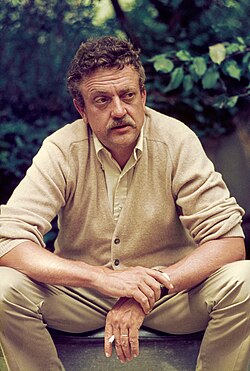
True story, Word of Honor: Joseph Heller, an important and funny writer now dead, and I were at a party given by a billionaire on Shelter Island. I said, 'Joe, how does it make you feel to know that our host only yesterday may have made more money than your novel Catch-22 has earned in its entire history?' And Joe said, 'I've got something he can never have.' And I said, 'What on earth could that be, Joe?' And Joe said, 'The knowledge that I've got enough.' Not bad!

If you wish to make Pythocles wealthy, don't give him more money; rather, reduce his desires.

Happiness is not a goal, it is a by-product. Paradoxically, the one sure way not to be happy is deliberately to map out a way of life in which one would please oneself completely and exclusively.

If in our daily life we can smile, if we can be peaceful and happy, not only we, but everyone will profit from it. If we really know how to live, what better way to start the day than with a smile? Our smile affirms our awareness and determination to live in peace and joy. The source of a true smile is an awakened mind.
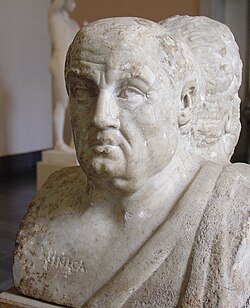
No one can lead a happy life, or even one that is bearable, without the pursuit of wisdom, and the perfection of wisdom is what makes the happy life. Yet even the beginnings of wisdom make life bearable. But this conviction must be firmly grasped and not merely adopted in words, if we wish to draw any strength from what we know.
Of all the means which wisdom acquires to ensure happiness throughout the whole of life, by far the most important is friendship.

Independence I have long considered as the grand blessing of life, the basis of every virtue; and independence I will ever secure by contracting my wants, though I were to live on a barren heath.
There are two kinds of pleasure: one consisting in a state of rest, in which both body and mind are undisturbed by any kind of pain; the other arising from an agreeable agitation of the senses, producing a correspondent emotion in the soul. It is upon the former of these that the enjoyment of life chiefly depends. Happiness may therefore be said to consist in bodily ease, and mental tranquility.
Resolve not to be poor: whatever you have, spend less. Poverty is a great enemy to human happiness; it certainly destroys liberty, and it makes some virtues impracticable, and others extremely difficult.
Resolve not to be poor: whatever you have, spend less. Poverty is a great enemy to human happiness; it certainly destroys liberty, and it makes some virtues impracticable, and others extremely difficult.

He who knows that enough is enough will always have enough.
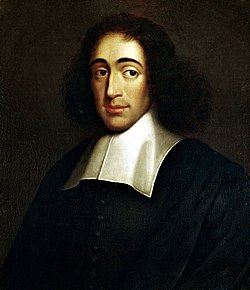
Blessedness is not the reward of virtue, but virtue itself; neither do we rejoice therein, because we control our lusts, but, contrariwise, because we rejoice therein, we are able to control our lusts.

He is richest who is content with the least, for contentment is the wealth of nature.

After you have exhausted what there is in business, politics, conviviality, and so on — have found that none of these finally satisfy, or permanently wear — what remains? Nature remains.