
The inhabitants of these islands are the most hospitable people I have ever encountered; they give freely of what they possess, asking nothing in return.

“How selfish soever man may be supposed, there are evidently some principles in his nature, which interest him in the fortune of others, and render their happiness necessary to him, though he derives nothing from it except the pleasure of seeing it.”
The inhabitants of these islands are the most hospitable people I have ever encountered; they give freely of what they possess, asking nothing in return.

The only real, dignified, human doctrine is the greatest good of all, and this can only be achieved by uttermost self-sacrifice.

Thousands of candles can be lit from a single candle, And the life of the candle will not be shortened. Happiness never decreases by being shared.
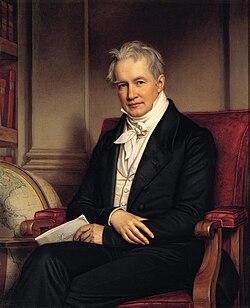
Nature everywhere speaks to man in a voice familiar to his soul.

Our virtues and our failings are inseparable, like force and matter. When they separate, man is no more.

In democratic ages men rarely sacrifice themselves for another, but they show a general compassion for all the human race. One never sees them inflict pointless suffering, and they are glad to relieve the sorrows of others when they can do so without much trouble to themselves. They are not disinterested, but they are gentle.

When one cultivates to the utmost the principles of his nature, and exercises them on the principle of reciprocity, he is not far from the path. What you do not like when done to yourself, do not do to others.

There is a love of wild Nature in everybody, an ancient mother-love ever showing itself whether recognized or no, and however covered by cares and duties.
When the happiness or misery of others depends in any respect upon our conduct, we dare not, as self–love might suggest to us, prefer the interest of one to that of many. The man within immediately calls to us, that we value ourselves too much and other people too little, and that, by doing so, we render ourselves the proper object of the contempt and indignation of our brethren. Neither is this sentiment confined to men of extraordinary magnanimity and virtue. It is deeply impressed upon every tolerably good soldier, who feels that he would become the scorn of his companions, if he could be supposed capable of shrinking from danger, or of hesitating, either to expose or to throw away his life, when the good of the service required it.

At the bottom of the heart of every human being, from earliest infancy until the tomb, there is something that goes on indomitably expecting, in the teeth of all experience of crimes committed, suffered, and witnessed, that good and not evil will be done to him. It is this above all that is sacred in every human being. The good is the only source of the sacred. There is nothing sacred except the good and what pertains to it.

Of all the means which wisdom acquires to ensure happiness throughout the whole of life, by far the most important is friendship.
Every man is, no doubt, by nature, first and principally recommended to his own care; and as he is fitter to take care of himself than of any other person, it is fit and right that it should be so.

If in our daily life we can smile, if we can be peaceful and happy, not only we, but everyone will profit from it. If we really know how to live, what better way to start the day than with a smile? Our smile affirms our awareness and determination to live in peace and joy. The source of a true smile is an awakened mind.

Happiness is not a goal, it is a by-product. Paradoxically, the one sure way not to be happy is deliberately to map out a way of life in which one would please oneself completely and exclusively.

The place God calls you to is the place where your deep gladness and the world's deep hunger meet.

There is no wisdom in useless and hopeless sorrow; but there is something in it so like virtue, that he who is wholly without it cannot be loved.

Just practice good, do good for others, without thinking of making yourself known so that you may gain reward. Really bring benefit to others, gaining nothing for yourself. This is the primary requisite for breaking free of attachments to the Self.

Once the realization is accepted that even between the closest human beings infinite distances continue to exist, a wonderful living side by side can grow up.

Out of my experience, such as it is (and it is limited enough) one fixed conclusion dogmatically emerges, and that is this, that we with our lives are like islands in the sea, or like trees in the forest. The maple and the pine may whisper to each other with their leaves. ... But the trees also commingle their roots in the darkness underground, and the islands also hang together through the ocean's bottom. Just so there is a continuum of cosmic consciousness, against which our individuality builds but accidental fences, and into which our several minds plunge as into a mother-sea or reservoir.
The sun shines not on us but in us. The rivers flow not past, but through us, thrilling, tingling, vibrating every fiber and cell of the substance of our bodies, making them glide and sing. The trees wave and the flowers bloom in our bodies as well as our souls, and every bird song, wind song, and tremendous storm song of the rocks in the heart of the mountains is our song, our very own, and sings our love.

Be kind, for everyone you meet is fighting a hard battle.

As far as we can discern, the sole purpose of human existence is to kindle a light in the darkness of mere being.

After you have exhausted what there is in business, politics, conviviality, and so on — have found that none of these finally satisfy, or permanently wear — what remains? Nature remains.

Only if we understand can we care. Only if we care will we help. Only if we help shall they be saved.

He was that child's stay, and she was his prop. Thanks to him, she could walk through life; thanks to her, he could continue in virtue.